neocities version [wip]
  accessibility version [wip]

🛠️ LORE TIMELINE (EXPANDED) 🛠️
this project is a collection of directly sourced canon media (instead of summarized by yours truly like in the main timeline pages), presented in chronological order for your enjoyment!
(and cause we’re insane and find it fun)
▰▱▰▱▰▱▰▱▰▱▰▱ 📅 1970's ▰▱▰▱▰▱▰▱▰▱▰▱
🕹️ “Bedtime Story” minigame: Secret of the Mimic
[watch here]
“Welcome to bedtime. Would you like a story to help you sleep?” {Edwin}
“Hold on. Someone’s missing. David? Where’s David? Come out, come out wherever you are. There you are.” {F10N4}
“Do you remember how our story begins? That’s right! Once upon a time.“ {Edwin}
“A rumbly tumbly bear sang sweetly by a big blue lake.” {F10N4}
“A wiley fox buckled swashes in his pirate ship.” {Edwin}
“The clumsy chicken danced in the sunlight on the top of her coop.” {F10N4}
“The bouncy blue bunny hopped through the forest down the garden patch.” {Edwin}
“An angry alligator was swimming in the lake.” {F10N4}
“A pesky puppy played fetch by itself on the beach.” {Edwin}
“Isn’t that nice? So, what happens next?” {F10N4}
“A rolly polly bear sat down and offered a pot of honey. They ate with glee.” {Edwin}
“Then a crafty fox sat down and started a game of chess.” {F10N4}
“A clumsy chicken came and spilled her marbles. They had fun picking them up.” {Edwin}
“A bunny hopped over and offered to play cards.” {F10N4}
“An angry alligator came by and promised not to eat anyone. They had carrots instead.” {Edwin}
“A pesky little puppy yapped and played fetch.” {F10N4}
“They had so much fun! You remember what happens next?” {Edwin}
“A rolly polly bear joined the others and offered his honey, but then he spilled it all over them. Oh no!” {F10N4}
“Then the crafty fox came over and challenged them all to a race, but he cheated to win.” {Edwin}
“A clumsy chicken joined them, and they went out for ice cream. But she dropped all their ice cream. Oh no!” {F10N4}
“A bunny hopped over and offered to play cards, but they couldn’t agree on the game. The bunny was sad.” {Edwin}
“An angry alligator came by and promised not to eat anyone, but then he ate one of them.“ {F10N4}
“A pesky puppy yipped and yapped, she made so much noise that she gave everyone a headache.” {Edwin}
“Oh no! What did they do?” {F10N4}
"The pesky puppy saw everyone arguing. The group yelled and gnashed their teeth, and it scared the puppy and she ran away." {Edwin}
“This shocked all the friends, and they realized that anger didn’t solve anything. They all started a band and lived happily ever after. The End.
The moral of the story is that friendship is the real treasure. Now it’s time for bed. Your parents love you. Sleep tight.” {F10N4}
📚 The Mimic
[read here (text)][read here (graphic novel)]
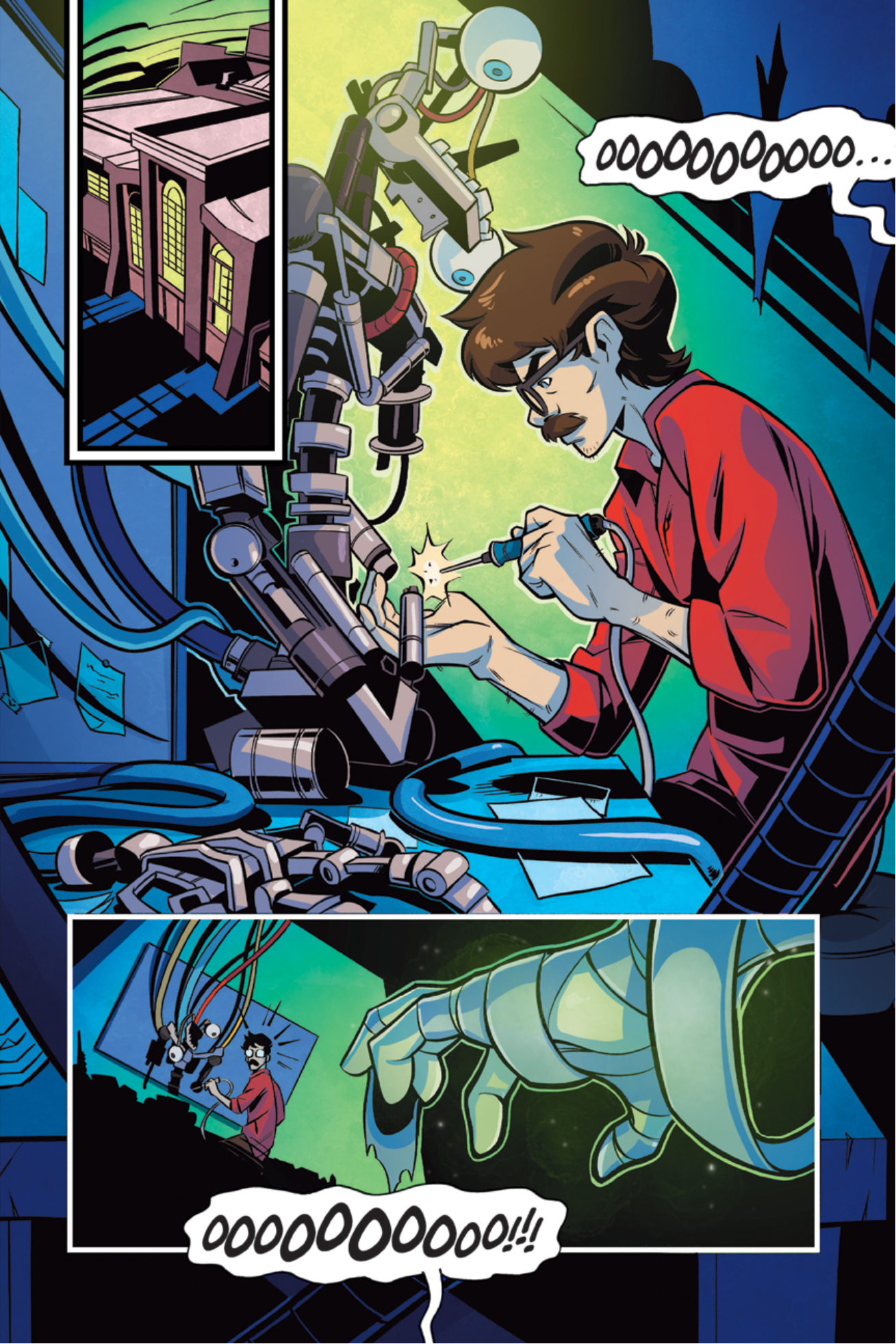
“Daddy, I’m a ghost!”
Edwin Murray, his brow in its usual deep furrow, swore when his son’s small but insistent hand tugged at Edwin’s flannel shirtsleeve. The motion forced Edwin to give up on the intricate wiring job he was attempting.
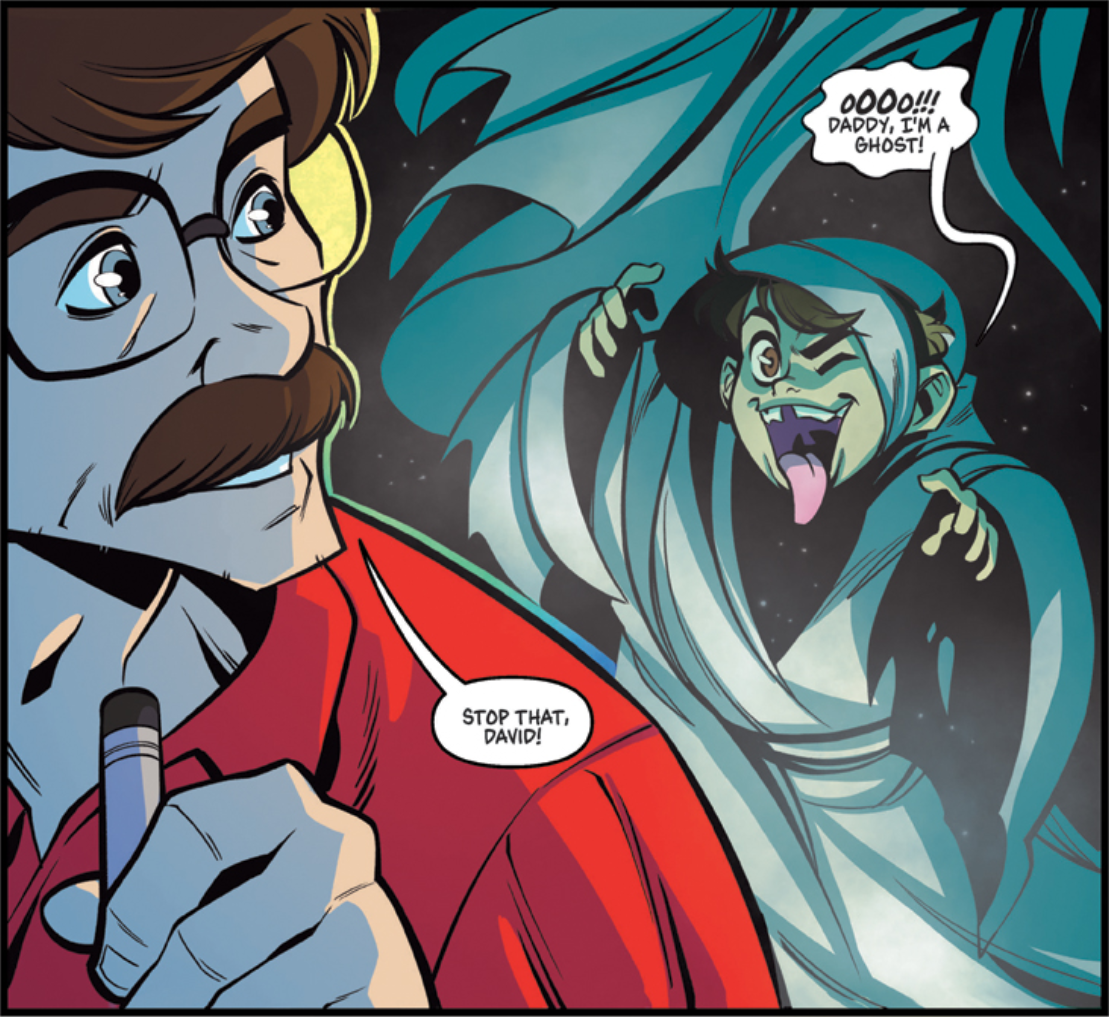
“Stop that, David!” Edwin snapped.
Edwin looked down, expecting to see the badly cut thatch of David’s fine brown hair. Instead, Edwin found himself looking at yellowing lace. The lace was draped over the brown hair, and the rest of David as well. The fragile mesh fabric was undulating and moaning—or rather, the four-year old under the fabric was moaning, in a pretty decent approximation of a scary ghost.
At the end of the undulating lamentation, however, the lace (actually, the boy) sneezed. Then it coughed. The lace churned as if about to erupt.
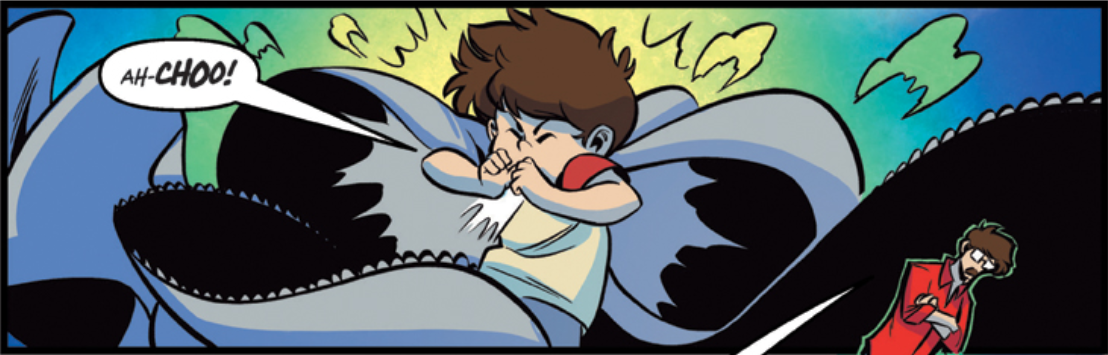
“That’s what you get for playing with dusty old lace,” Edwin said, his annoyance ebbing a bit.
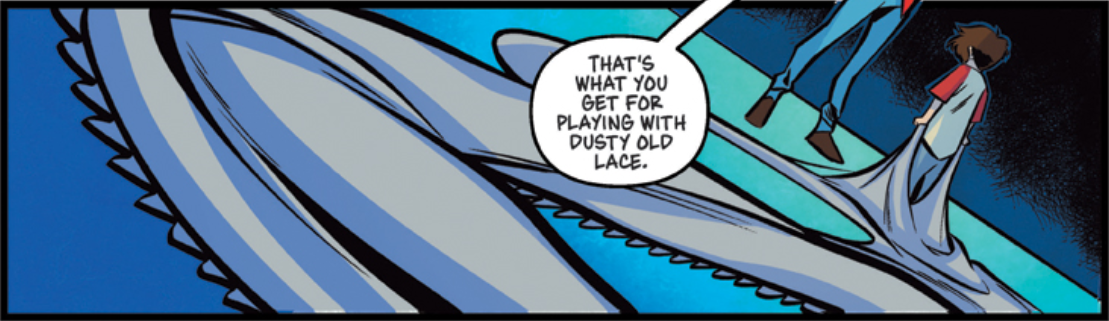
He had to admit that he enjoyed David’s creativity, and watching the lace thrash was amusing. Edwin just hoped the boy wasn’t picking up some noxious disease from the ancient fabric.
It was early March, and spring rain was seeping in through a few of the cracks in the factory’s old brick walls and dripping down from a couple leaks in the tin roof. The water from those leaks collected on the third floor, but the moisture pervaded the entire building. And although the factory had dozens of tall, skinny paned windows, several were boarded up and the thick glass panes of most of the rest had been painted gray. When he’d bought the building, Edwin had painstakingly scraped the paint off the second-floor windows so the living space would have light, but he’d left the lower windows painted over. He liked the privacy, even though the lack of light made the expansive space damp and musty. Edwin was already concerned that David was going to catch a bad cold as he had the past two springs. He didn’t relish the idea of adding the potential bugs and bacteria lingering on lace to the mix.
When Edwin had bought the abandoned factory to house his new business, he’d found yards and yards of knotted, crumbling lace throughout the building. The lace was piled against the factory’s brick walls, strewn across its rough cement floors, mounded beneath the Leavers Machine in the main production room, and even wrapped around its dozens of concrete support pillars. That lace was sprinkled with the pillars’ pale green peeling paint. Edwin wasn’t sure why the factory’s owners had left such intricate work behind. However, Edwin rather liked the lace. Although some of it had mildewed, he thought much of it might be salvageable, and he was sure his creative mind could come up with some use for it. So, he had left it where it was.
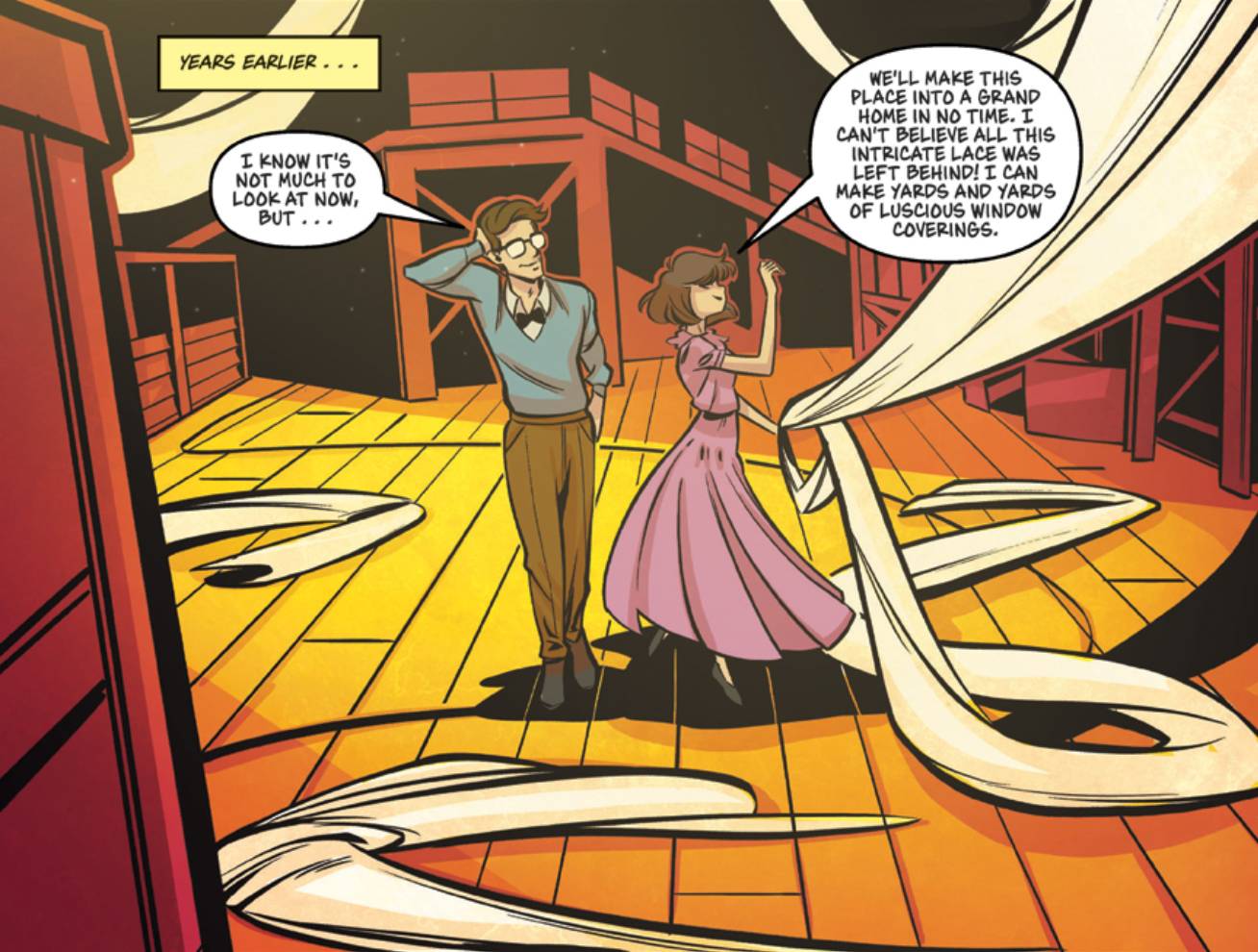
His wife, Fiona, had liked it, too. Five years before, when Edwin had acquired the building, he and Fiona had also just purchased the old Queen Anne mansion they’d planned to restore to its original grandeur. Fiona had been delighted by all the lace in the old factory because she’d envisioned using it to make “yards and yards and yards of luscious window coverings.” “And a canopy for our bed, my love,” she’d added, winking at Edwin. Edwin had blushed. Back then—and it now seemed so long ago—Edwin had been a deliriously happy man.
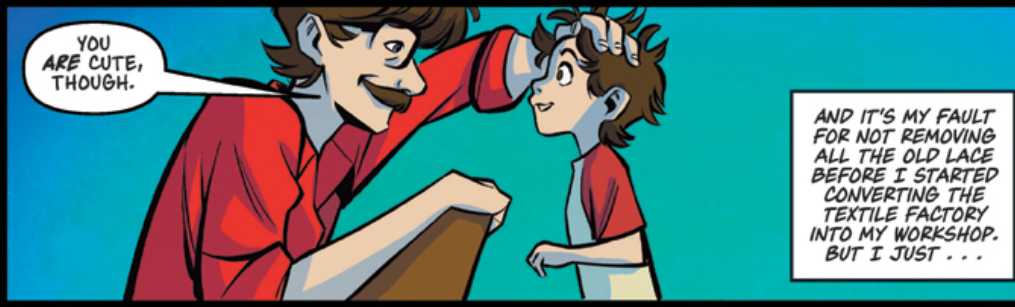
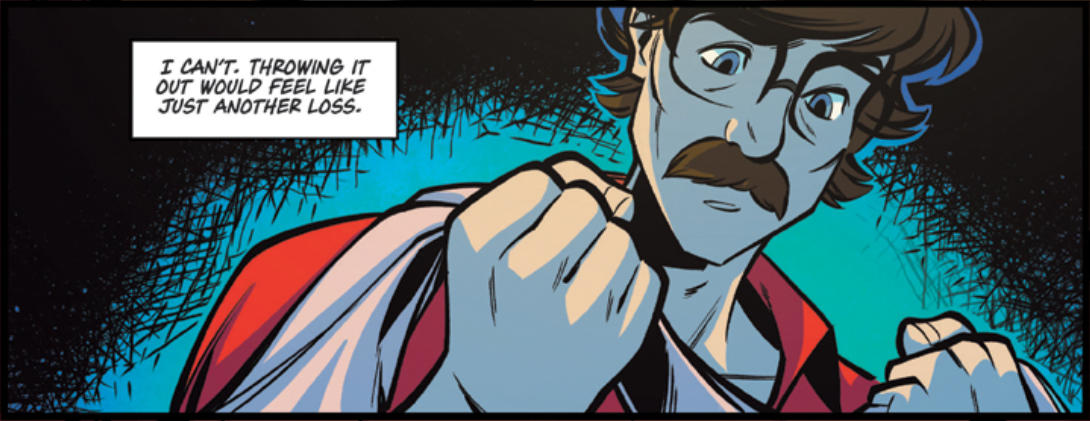
After Fiona had died giving birth to David, Edwin had been tempted to get rid of all the lace. He hadn’t wanted to trigger memories of a time that was forever lost to him. However, throwing it out felt like just another loss. He couldn’t bear to do it. And so the lace remained. And so did the memories.
The lacy ghost sneezed again. Edwin reached down and pulled the dusty fabric off his son. His impish, freckled face revealed, David grinned, sneezed once more, and wiped his nose so hard it was a miracle that the uptilted snoot remained on the boy’s face at all.
“I thought you were going to play with your toys while I worked,” Edwin said, doing his best to sound stern. “We had an agreement. Remember? You play quietly for an hour, Daddy gets work done, and then we go for ice cream.”
“Ice cream!” David shouted. “Chocolate chip ice cream!” David, who was clutching a plush white tiger in his left hand, grabbed the lace again with his right. He threw the lace over his shoulders like a cape and began dancing around. “Chocolate chip! Chocolate chip! Chocolate chip!” He turned the words into part chant, part song.
Edwin crossed his arms and studied his son. As he often did, Edwin looked for some evidence of his own looks in the little boy. He never found any, beyond a similar slope to their eyes.
Edwin was happy that David looked more like Fiona than Edwin. Fiona had been far lovelier than he was, as he often told her. Edwin had never understood what Fiona had seen in him. Whenever he’d asked her, she’d tweak the full sandy-brown mustache that Edwin had worn since his senior year in high school. “I fell for your mustache,” Fiona would tease. Then she’d giggle and give him a big kiss, and he would forget to care about why she loved him. He was just so happy that she did.
David’s song grew louder, and it picked up some percussion. He’d taken up a wooden slat from the old Leavers Machine and used the stick to pound on the cement floor in time to his chant.
Edwin shook his head. Ice cream was the last thing David needed. The boy was already worked up. In fact, he was nearly always worked up.
Edwin remembered how excited he’d been when he’d learned he was going to be a father. He already had a job he loved, a gorgeous wife he adored, who, inexplicably, adored him back, and enough money to buy what he and his wife wanted. Now, he’d have a child, too. He’d have a legacy, someone to pass his life’s work on to.
For nearly all Edwin’s twenty-four years of life, he’d loved building things. When he’d been about David’s age, he’d begun taking apart his mother’s small appliances so he could see how they worked, though they rarely still worked when he put them back together. His mother was amazingly tolerant of the need to frequently replace things. By the time Edwin was eight, he knew that he wanted to build useful machines that would change people’s lives. He believed in automating life’s most mundane tasks, and he was sure he could create robots to replace most household chores people didn’t enjoy.
His got his first patent on a robotic vacuum cleaner when he was still a college student. Despite the bugs and high price point, it had sold well enough to allow Edwin to start his business right out of school. The vacuum also funded a good life for Edwin and Fiona, who had met at school and married as soon as they graduated. The vacuum was wildly popular—at first. Unfortunately, the machines didn’t have the longevity that customers expected, and complaints began rolling in. Eventually, sales fell off.
Edwin watched his son cavort around in front of the metal garment rack that held a circus-like array of animal and other character costumes and imagined, for at least the thousandth time, how different things would have been if Fiona had lived. If she’d survived giving birth to David, Edwin wouldn’t have been derailed by grief, and he wouldn’t have had to try to figure out how to invent his machines and take care of his infant son at the same time.
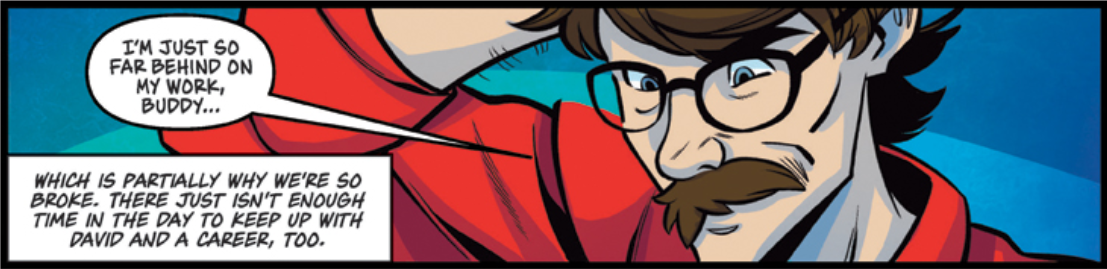
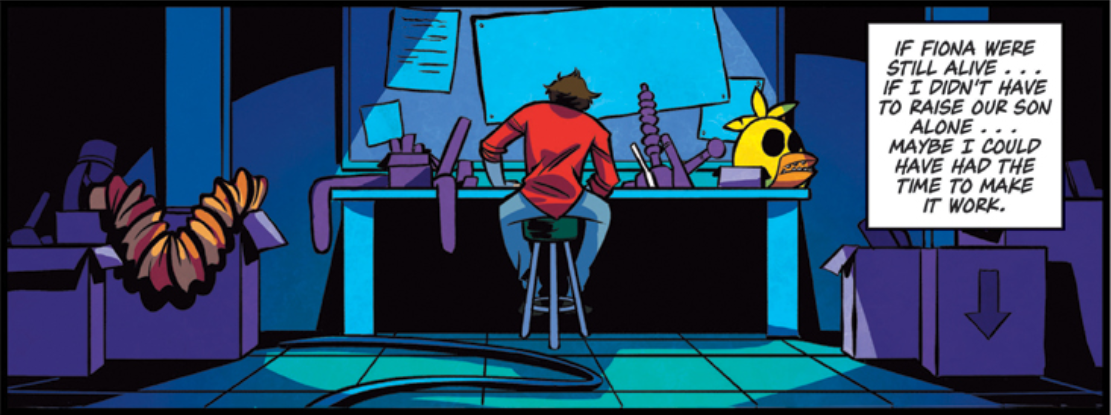
David Sean Murray, now attempting to do a somersault while still wrapped in lace, had come into the world just before dawn on a stormy fall morning, and he’d arrived in full screaming fury. Given that Fiona had been bleeding to death as David caterwauled, Edwin assumed that David’s protest against being taken from his mother’s womb had been amplified by his probable understanding, on some unfathomable mother-son-bonded level, that he was about to lose his mother for good. Or maybe Edwin was being fanciful. Maybe David was just a noisy baby.
Whatever the reason, David’s vocal protestations didn’t end on the day of his birth. They continued on and on and on. Edwin had spent the next several weeks trying to function on an hour or two of sleep (if he was lucky) per night. Instead of being able to throw himself into his work and either fix the vacuum or come up with something even better, Edwin had to spend the better part of his days feeding David, burping David, rocking David, changing David’s diapers, and listening to David cry and cry and cry and cry.
Edwin loved his son. He really did. But without Fiona, Edwin was a man hanging on to a cliff’s edge by the tips of his fingernails. He wasn’t sure he could do what he needed to do. Four years had passed, and he still wasn’t sure.
David’s chocolate chip chant was getting louder and louder. The boy was spinning faster and faster.
“David!” Edwin shouted.
David stopped spinning, but the momentum sent him staggering across the cement floor. He careened into Edwin’s worktable, knocking over the animatronic head that Edwin had been wiring. The head, that of a bright yellow chick, rolled across the table and fell to the cement floor. A spark shot out of the chick’s eye.
“David!” Edwin yelled even louder. “That’s enough!”
David lost his balance entirely and landed on his rump. The boy’s dark brown eyes blinked twice, then David’s severely arched brows bunched. He buried his face in his tiger and started to cry.
Edwin sighed and picked his son up. “Come on,” Edwin said. “I think you need a nap.”
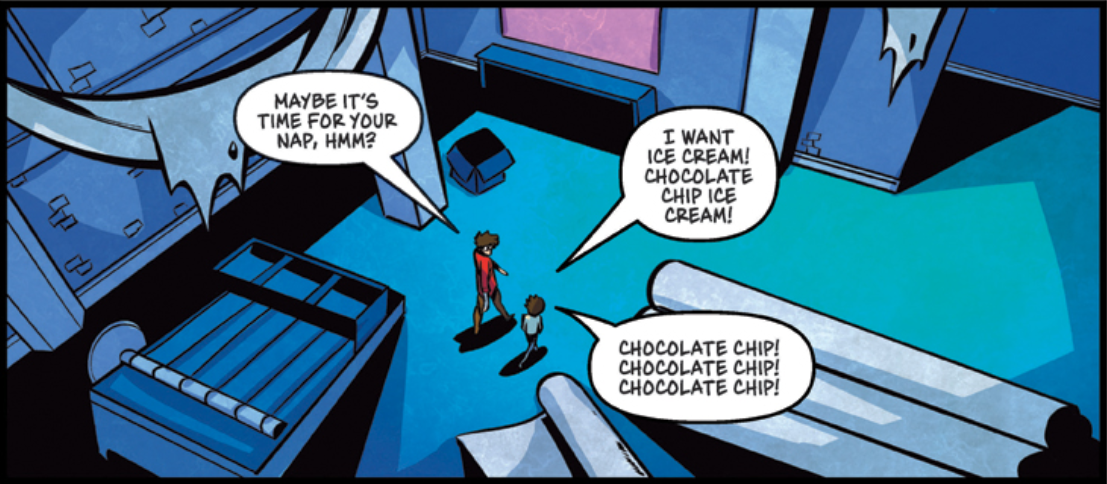
David, remarkably big for his age, in spite of having two short parents, wasn’t an easy carry. He weighed close to fifty pounds, and he was three-and-a-half-feet tall. Pretty soon, Edwin, only five-foot-five himself, wasn’t going to be able to cart his son around.
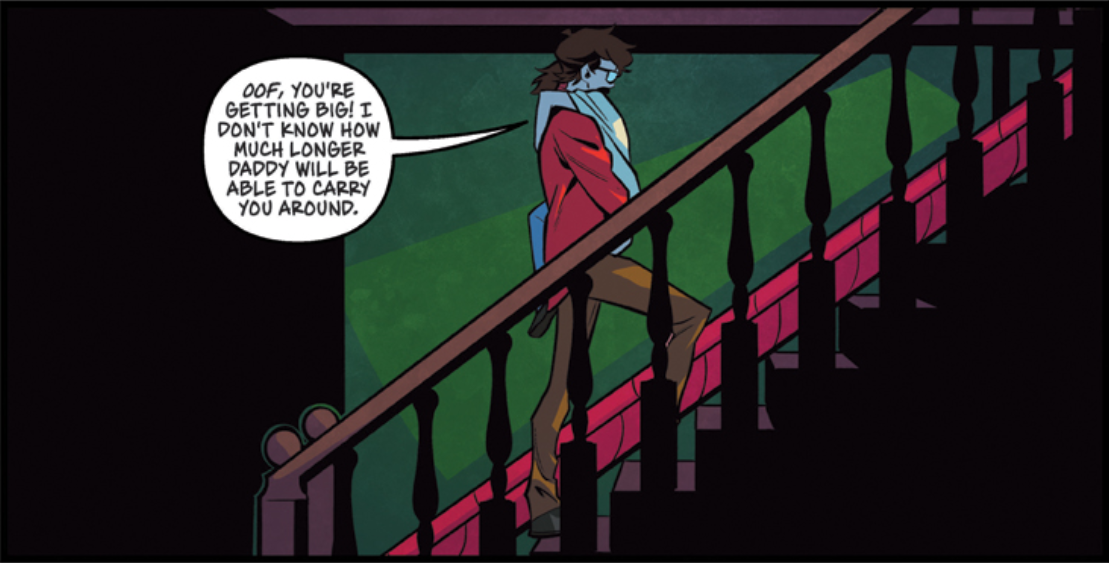
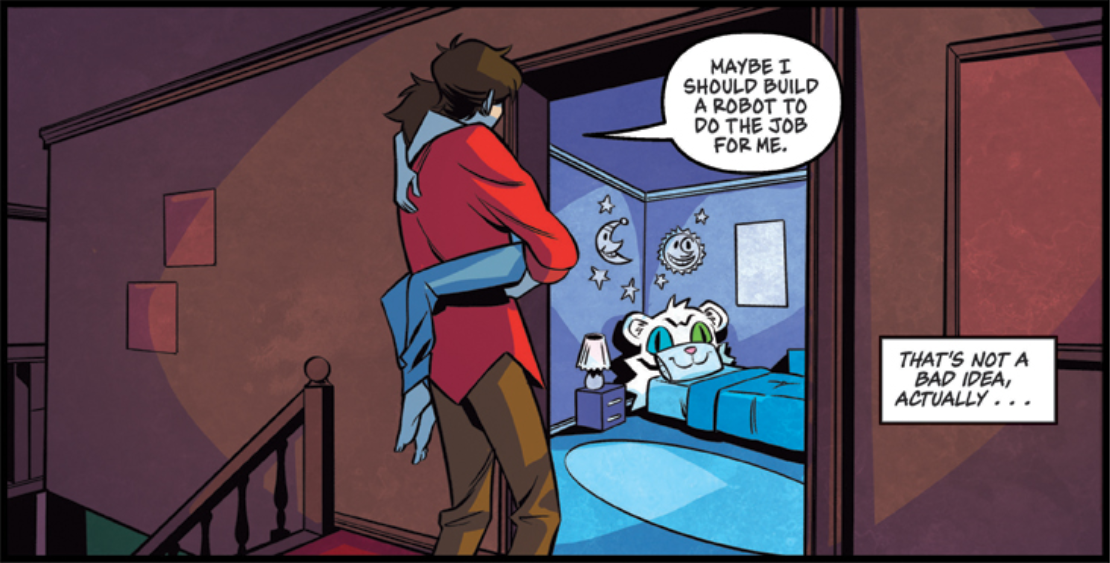
Perhaps he could build a robot to do the job for him.
Edwin’s steps faltered. “That’s not a bad idea,” he said to himself.
David stopped his crying in mid-gulp and looked up. “What’s a bad idea, Daddy?”
“No, not a bad idea,” Edwin attempted to clarify. “Just not a bad idea. Which means a good idea.”
David twisted his nose and pursed his full, small lips. Edwin didn’t blame the boy for his confusion.
“Never mind,” Edwin said. “How about I read you a story and you take a short nap, and then we’ll get that ice cream?”
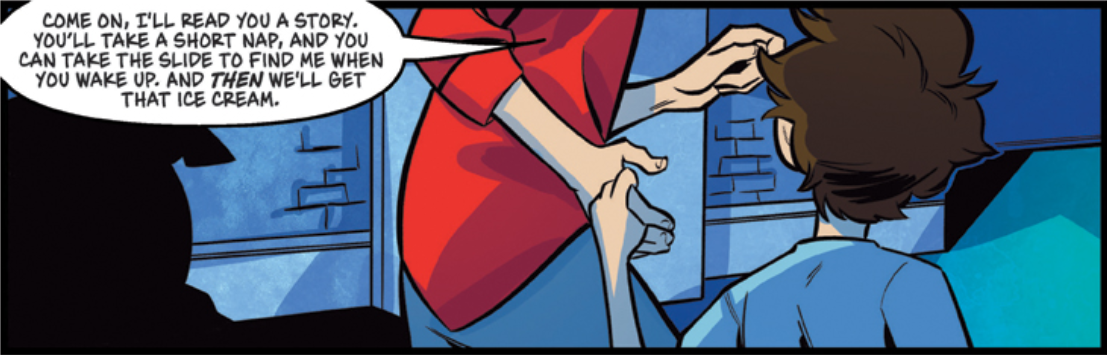
David stuck a stubby index finger in his mouth and sucked on it while he pondered the proposal. Finally, he nodded.
“Good boy,” Edwin said.
He’d reached the top of the steep cement stairs that led to the second floor of the building. He put David on his feet, took the boy’s hand, and led him down a wide hall to what used to be part of the factory’s office and storage space.
After Fiona passed away, Edwin had known he couldn’t manage a house and his business property at the same time. And since the factory was where Edwin did his work, the choice of which to keep was an easy one. Thankfully, Edwin was an engineer-slash-architect, so he converted part of the factory’s offices to a small apartment with a compact sitting area, a tiny galley kitchen, one bedroom, and one bathroom with an old clawfoot tub. All the little rooms except the kitchen, which was floored with blue linoleum, now had wall-to-wall brown carpet (chosen to hide the dirt). All the apartment’s exterior brick walls and interior white-painted walls were decorated with an eclectic mix of David’s “artwork,” aka scribbled drawings, and old photographs (in the factory’s offices, Edwin had found dozens of black-and-white photos of the factory in its heyday). As David grew older, Edwin would have to create a second bedroom, but for now, keeping an eye on David was easier when they slept in the same room. Not that they slept there very often. Much of the time, Edwin worked on the factory’s main level at night, and David slept on a cot nearby.
Edwin knew that this wasn’t the ideal setting for raising a child. There were hundreds of ways a child could get injured in the five-thousand square-foot building. David, though, in spite of his penchant for noisy tantrums, was a good kid. He hadn’t defied Edwin’s orders to stay away from the machines—yet. Edwin had noticed that David was getting a little bolder in his adventures. That might become a problem as he got older.
And that was what made the idea Edwin had just had such a brilliant one. But would he have time to implement it?
“Daddy?”
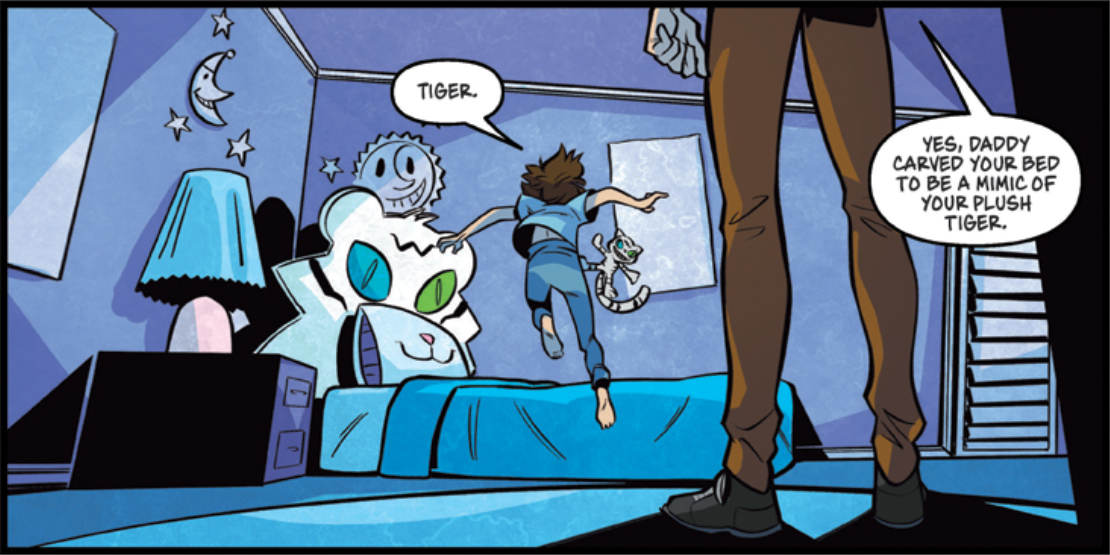
Edwin was peripherally aware that David was climbing onto his small mattress, which was nestled inside a wooden white tiger’s head. The head, which Edwin had carved to mimic the look of David’s favorite toy, arched up and over the top of the mattress. David loved the tiger bed, almost as much as his plush tiger, named, appropriately, “Tiger.”
“Daddy!”
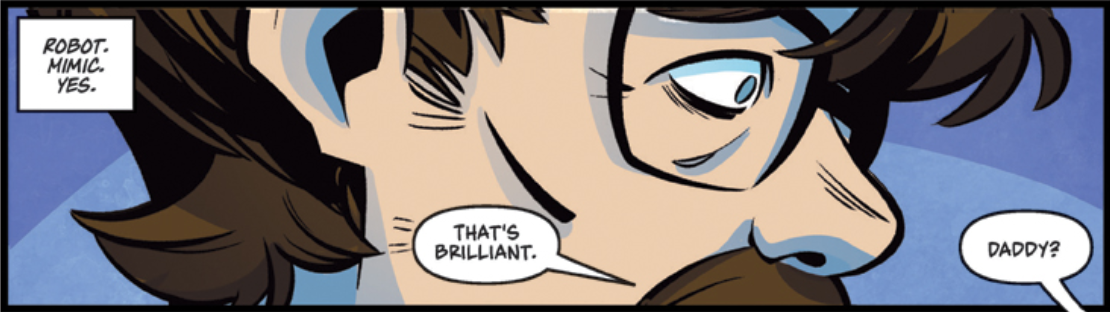
Edwin, who had been contemplating the notion of mimicking, blinked and frowned at his son, who was now standing on the mattress, holding up said plush tiger. “What is it, David?”
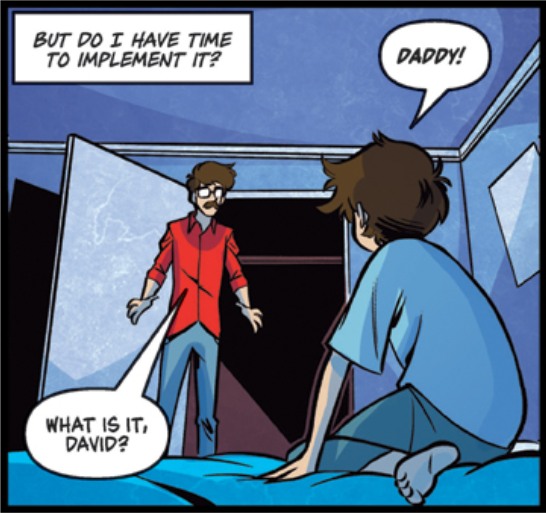
Edwin sighed and pointed at the mattress. “Lie down.”
David obliged, but he kept holding up his plush friend. “Tiger wants to know if he can have ice cream, too. Chocolate chip.”
“Of course. What other flavor is there?”
David giggled. “So, he can have some?”
Edwin stroked his mustache. “I suppose we could ask Lucy to get some of the special, invisible tiger ice cream made just for tigers out of the back for him when we get to the ice cream parlor.”
“Lucy’s nice,” David said.
“Yes, she is.” David liked the grandmotherly woman who owned the ice-cream parlor so much that Edwin had a feeling David’s love of ice cream was more related to a desire to see Lucy than it was about eating the ice cream itself. “But you won’t see Lucy unless you and Tiger take a nap.”
“Grrr,” David said. “That’s what Tiger says about naps.”
“Very wise,” Edwin said.
David leaned over and rooted around in a mess of books that were scattered over the floor by his bed. Edwin looked at his watch. His shoulders tightened.
“Uh, David?”
David’s head popped up. His eyes were bright and eager. Edwin felt like a jerk for what he was about to say, but …
“How about we skip the story?” Edwin asked.
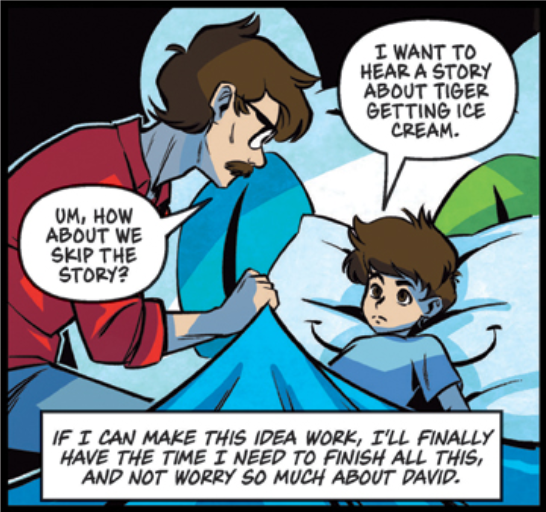
The bright eyes dimmed. A quiver appeared around the dimple in David’s chin.
“Just for now,” Edwin said. “I’ll read two stories before you go to bed tonight. But if Daddy is going to be able to take you for ice cream, he has to get work done.”
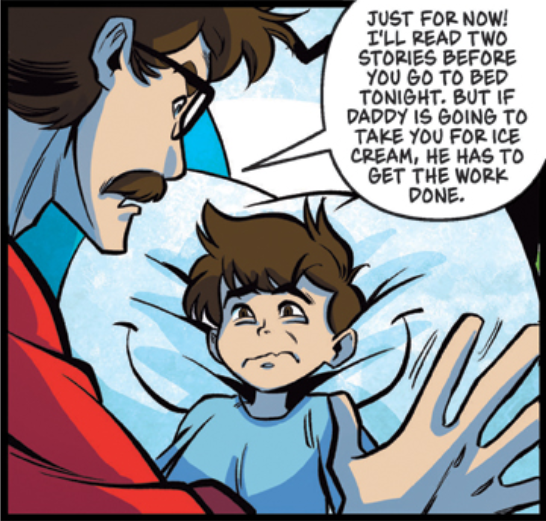
David pushed out his lower lip. Then, remarkably, he shrugged. “Okay, Daddy.”
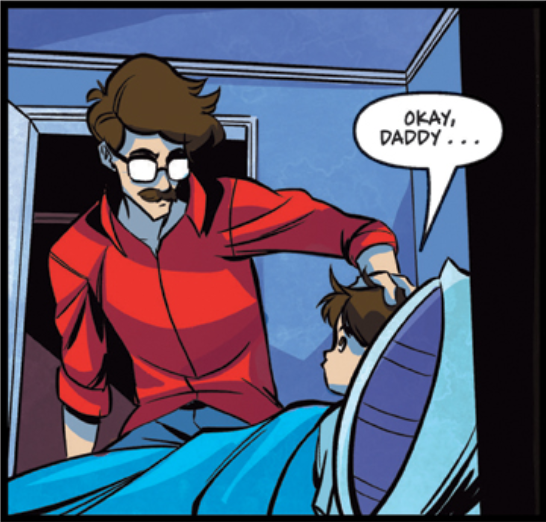
David flopped onto his stomach and tucked Tiger up against his chest. He closed his eyes, and within seconds, his breathing slowed.
David might have been a noisy—almost hyperactive—child, but he had some wonderful qualities. Not only did he listen pretty well, but he could also fall asleep nearly instantly. If only Edwin could learn that skill.
Edwin lightly smoothed David’s silky-soft hair. David stirred, then his breathing slowed even more.
Edwin headed back down to the main floor of the factory. He had so much work to do, and he might get just a half hour of uninterrupted concentration.

One of the old exposed pipes that crisscrossed the ceiling on the factory’s first level clunked. Edwin could hear David’s voice in his head: “It’s the pipe fairy, Daddy.”
David had names for all the sounds the factory made. He’d named its distinctive features as well. Although the factory was dark, filled with old debris, and dirtier than it should have been, David wasn’t scared by it. To David, the factory was home. He’d made friends with it.
More than one visitor to Edwin’s business had expressed concern about David’s safety in the large, old building that sat at the edge of the four-lane highway that ran through the industrial part of town. The land that the old factory sat on wasn’t much bigger than the factory itself, so David had no yard to play in, and their only lawn was a vacant gravel lot. Sometimes they’d play catch there, or they’d sit in folding chairs and play Name That Car. Edwin was teaching David the makes and models of the cars they spotted on the highway. David had an amazing memory and was learning quickly.
Recently, Fitz, the deliveryman who brought Edwin all his current projects and the supplies he ordered, had asked, “Don’t you worry about the kid falling down stairs or getting hurt in the machines or locked into a room or something?”
Edwin looked up from the clipboard he was signing. “What?” He noted that Fitz was looking past his shoulder toward the Leavers Machine that dominated the east wall of the main factory floor. Edwin turned to look at the mammoth lacemaking machine. It was dark and silent; none of its thousands of moving parts could so much as twitch now. As far as Edwin knew, it had been frozen in place for over thirty years. The machine had been turned off mid-job, and a now moth-hole-riddled expanse of lace hung loosely over the machine’s beam roller. Limp, yellowed threads stretched like spiderwebs from spools stacked on a nearby bobbin-winding unit.
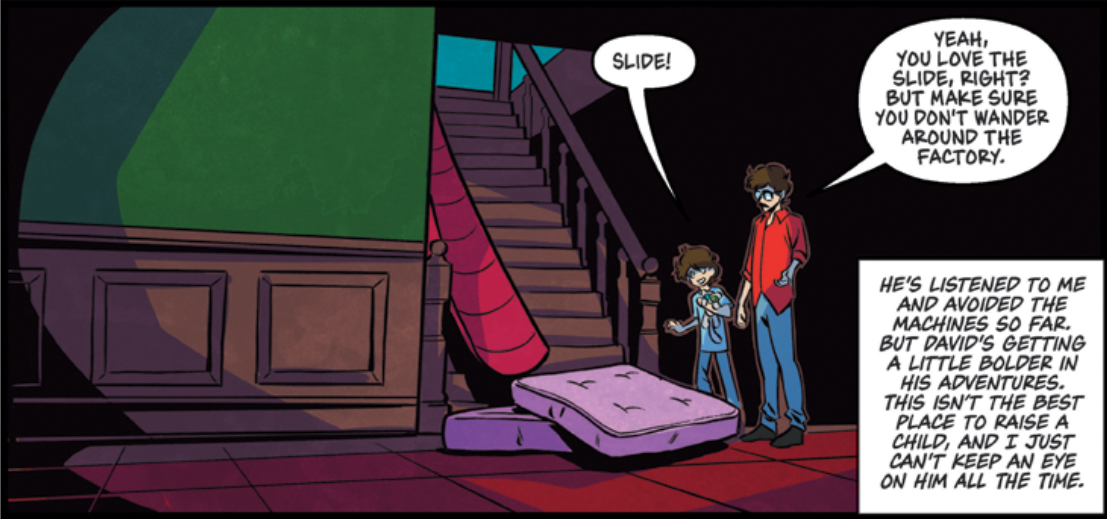
“Oh, he knows better than to go near that,” Edwin said. He felt a need to reassure Fitz, so he continued, “All of the extra rooms are closed up, and I usually help him with the stairs. I built him a slide for coming down.”
“You built your kid an indoor slide?” Fitz raised his bushy black eyebrows as he took back the clipboard.
“Yep,” Edwin said.
It had been fun. Edwin had found a secondhand slide that had once been in an amusement park, and he’d bolted it to one wall of the secondary stairs between the first and second floor. He’d placed a couple mattresses at the bottom of the slide. David loved the thing. Sometimes, he loved it too much. He frequently demanded that Edwin carry him up the sharply canted stairs over and over so he could slide down repeatedly.
Edwin returned to his worktable and frowned at the yellow chick head lying near one of the table’s legs. He sighed. He really had no interest in continuing the project. But he had to.
Edwin bent over and picked up the chick head. He sighed again.
It occurred to him that he sighed a lot. But why shouldn’t he?
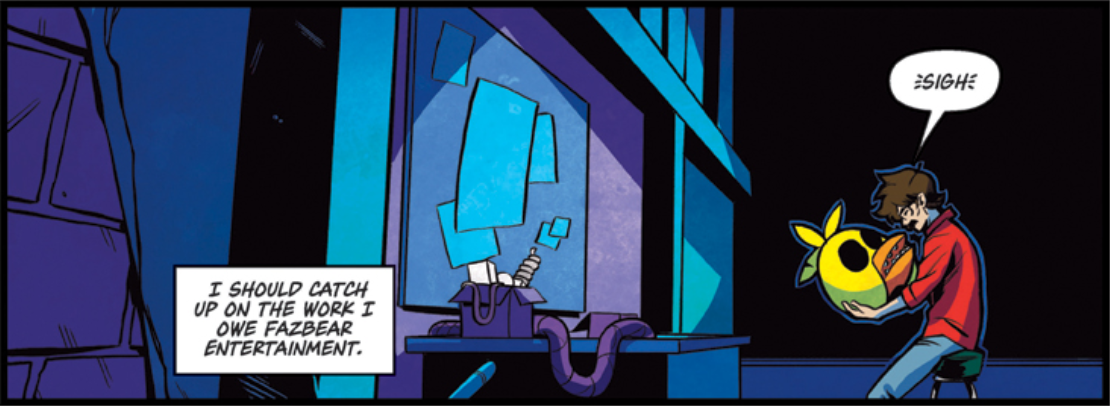
Edwin was trapped in a life he didn’t want to live, and he was doing projects he never in a million years thought he’d be working on. He was turning weird creature costumes into entertaining robots, for heaven’s sake. What was useful about that?
Edwin set the metal chick head on the table in front of him. This was the eighteenth animatronic character he’d been asked to create. He’d spent the last year and a half abandoning his own work to bow to another company’s agenda.
Edwin thought back to the day that he’d signed away his own enterprise. “You’re doing the right thing,” Grant Starling, the portly Fazbear Entertainment exec who’d negotiated the buyout, said as he watched Edwin scrawl his signature on the bottom of the twelve-page contract.
Am I? Edwin had wondered.
When Edwin had started his company, he’d thought his timing was perfect. It was the early ’70s. People wanted more time to play, and their minds were opening as well. Edwin had assumed these things would translate into a huge market for his machines. Unfortunately, he’d been wrong. Either that, or his personal tragedies had undermined his ability to create machines that were good enough to attract a big market share. The machines he designed were intricate and required thousands of hours of focused work—not to mention very expensive parts and tools. Raising a son on his own had pulled the rug out from under Edwin. He just hadn’t had enough in him to do everything he’d needed to do. When his finances ran dry, he’d had no choice but to sell his company to Fazbear Enterprises.
“You have a real talent,” Grant had said. “We’re happy to welcome you to the Fazbear family.”
Edwin turned over the chick head. He pressed his lips together in disgust. The fall to the floor had dented the chick’s beak and snapped off one of the metal “feathers” atop its skull. “Great,” Edwin muttered.
He was behind schedule and totally overwhelmed. He didn’t have time to take David to get the promised ice cream today, or any other day for that matter. But he’d have to do it. David would throw a tantrum to end all tantrums if Edwin didn’t keep his promise.
Edwin contemplated the chick’s head. He really had to get to work on it. But a new idea was leaping around in his mind. It was demanding attention. And rightfully so. If Edwin could pull off what he had in mind, it would open up an enormous amount of time for him. David would be entertained, and Edwin would be free to concentrate on his work.
Edwin pushed aside the chick’s head. He grabbed his drafting pad and a pencil.
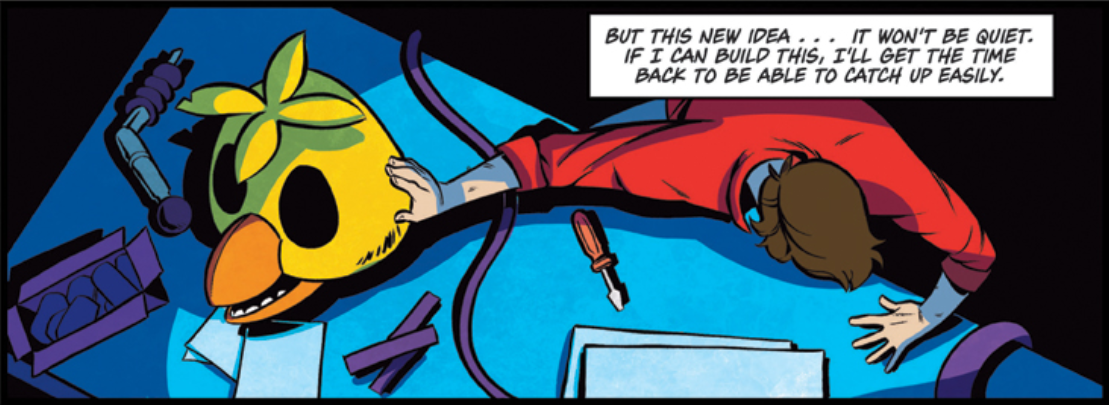
It put him three weeks behind in his projects for Fazbear Entertainment, but Edwin, working feverishly and essentially giving up sleep entirely for many bleary-eyed days, was able to take his idea from spark to completion in an amazingly short amount of time. Edwin attributed this speed to the passion he held for the project.
Edwin had been so caught up with Fazbear that he’d forgotten what it was like to pour himself into his own creations. He felt like he’d been gasping for air for months and now he could finally breathe again.
“Whatcha building, Daddy?” David had asked the first day that Edwin had begun implementing the plan he’d sketched out.
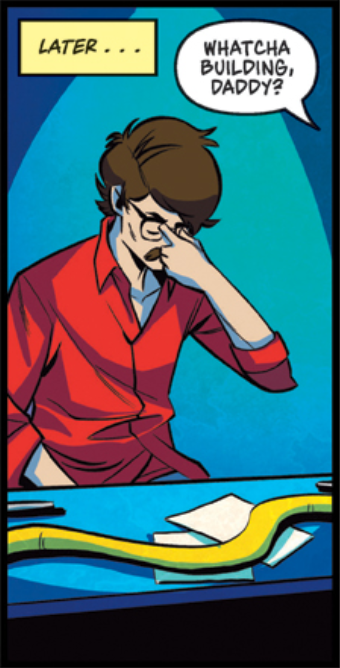
“I’m building you a new toy,” Edwin had said.
“What kind of toy?”
“One that will keep you company while I work,” Edwin had said.
David had twisted his lips into his I don’t understand expression.
“I’m building you a friend,” Edwin had clarified.
“Tiger is my friend.” David held up the white tiger. The tiger wasn’t all that white today. David had taken the tiger on an “aventure” behind the stacks of spools. The area had decades of accumulated dirt, and much of it now smudged Tiger’s muzzle.
“Well, once I finish what I’m building, you and Tiger will have another friend,” Edwin said.
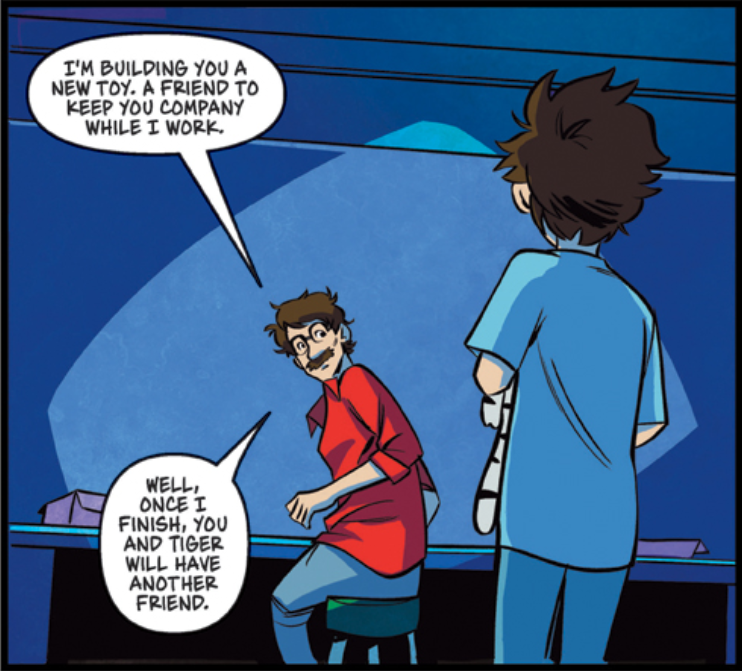
“Now, why don’t we take Tiger upstairs and clean him up. Then we can have dinner.”
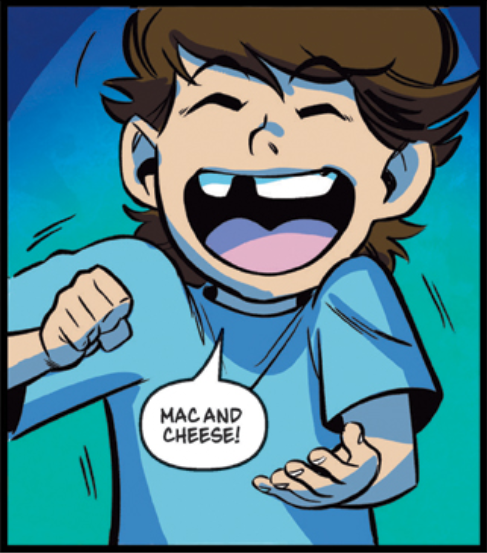
“Mac and cheese!” David screamed.
As Edwin had helped David climb the sharp flight of stairs, Edwin’s chest had tightened at the thought of his son having just a plush tiger … and soon, a robotic torso … for a friend. Next year, that would change. Edwin would be able to put David in kindergarten. Even though he’d relish the time to himself, Edwin didn’t have the money to pay for a preschool program at the moment, and the free class was across town. Besides, the one time he’d tried to enroll David in a community program, too many busybodies had started sticking their noses into his business. David apparently told some hair-raising stories about sleeping in an abandoned factory that groaned and clanked at night. No, for now, David was better off with Edwin. And if Edwin’s idea worked, Edwin could keep his son close and have enough time to work.
Edwin didn’t have a lot of money for supplies to build what he wanted to build, so he’d come up with a design that would allow him to cannibalize machinery in the factory.
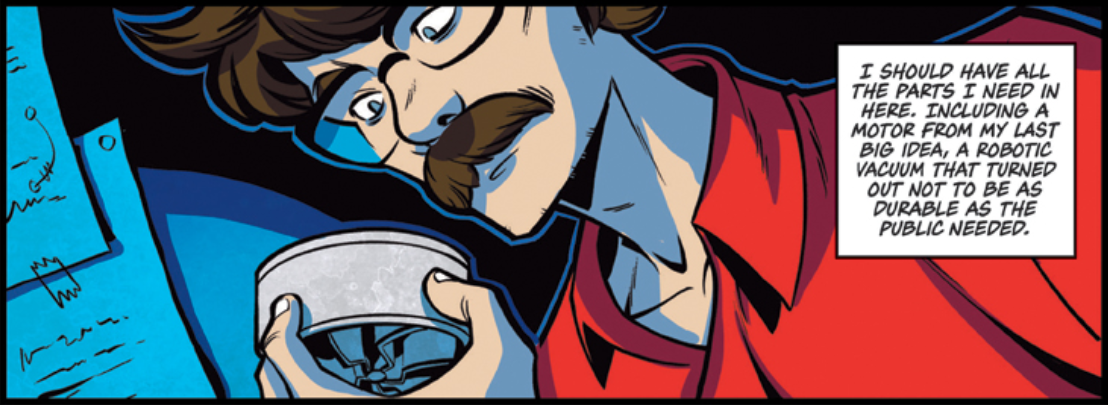
By pulling wiring from rooms that he never used, taking pistons from a defunct industrial washing machine, and borrowing steel and spools and gears and springs from the Leavers Machine, Edwin had fashioned the torso, arms, and head of a primitive-looking endoskeleton.
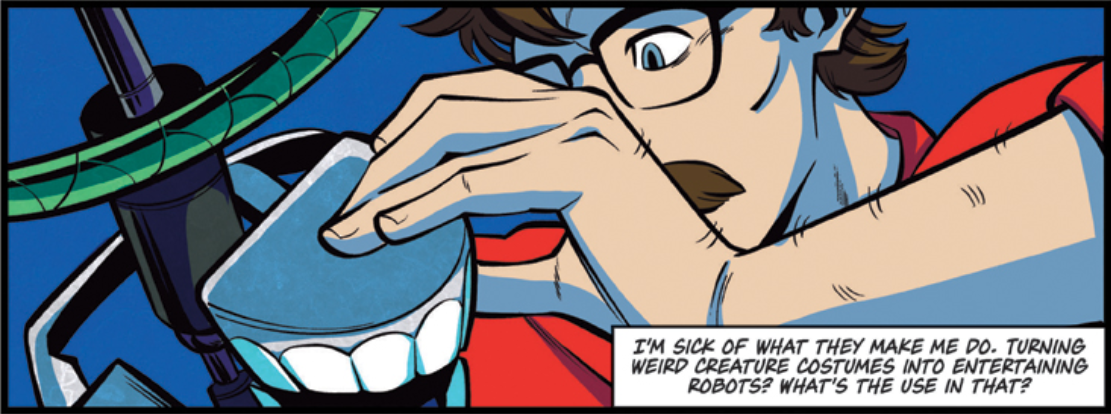
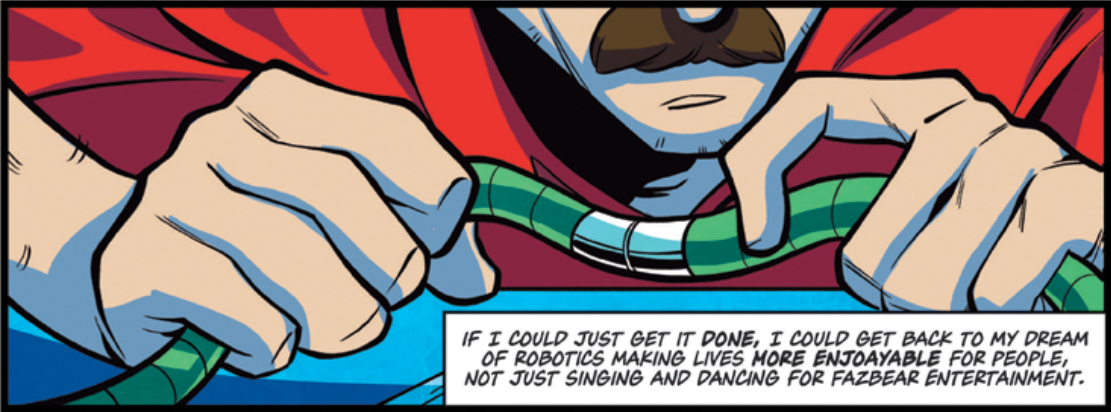
This physical housing was the easy part.
Once Edwin had constructed the legless robot, he had to build the computer for it. This he did by stealing hardware from some of his abandoned projects.
Now came the challenging part. Edwin wanted to create a thinking mind that would learn by mimicking what it observed.
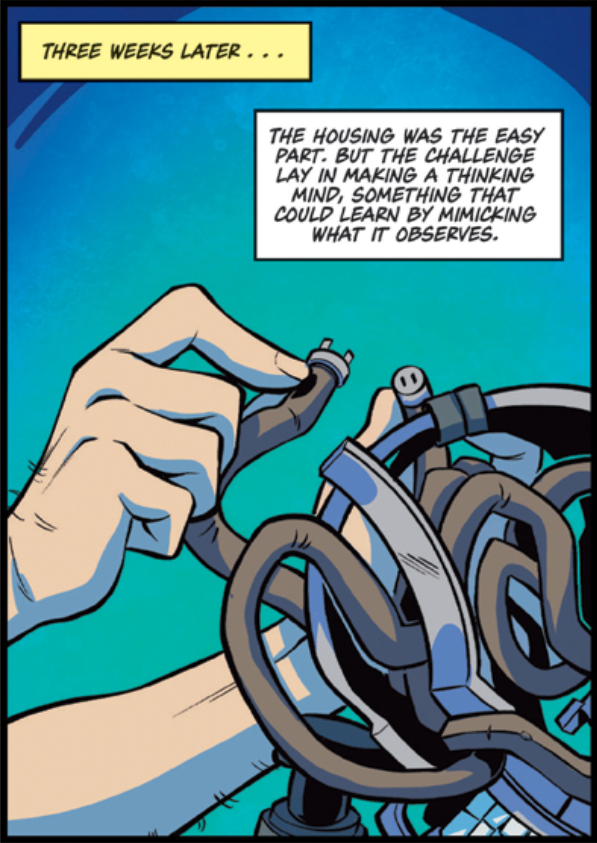
It had been Edwin’s observation of how the bed he’d built for David mimicked David’s favorite toy that had given him the idea. Thinking about the concept of mimicking so soon after casually contemplating having a robot to entertain his child had brought the whole idea together.
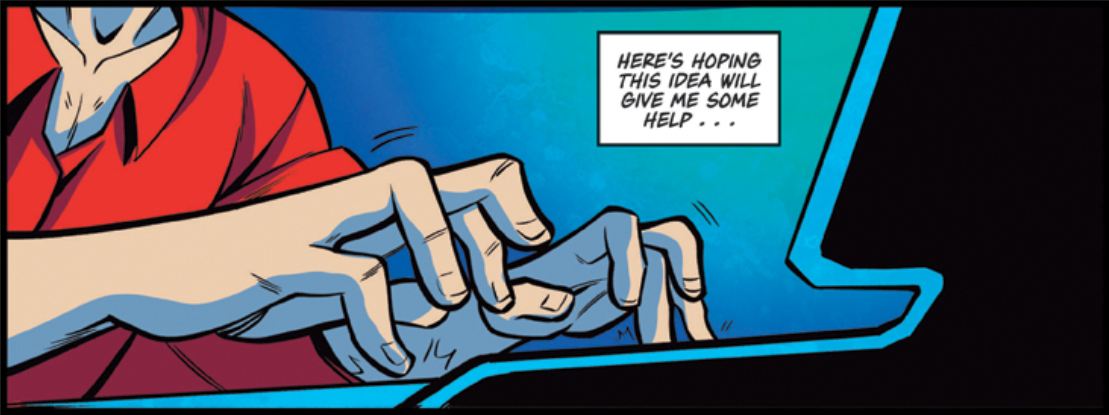
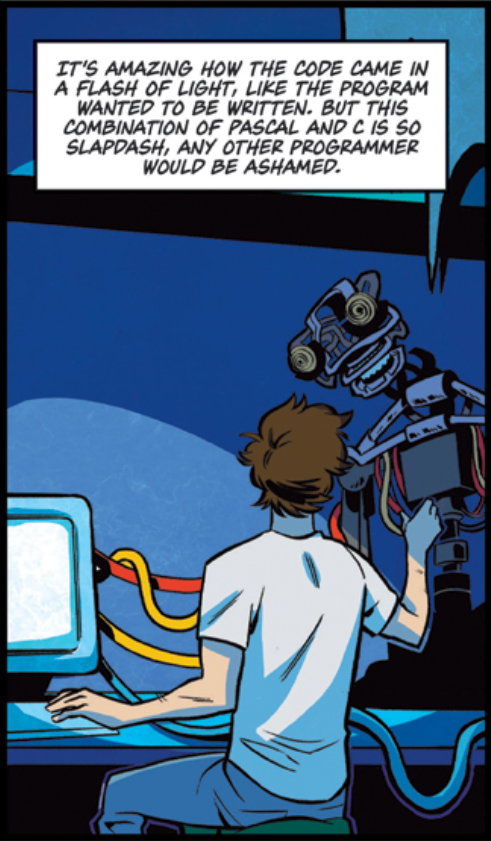
Perhaps because the idea was inspired, or perhaps because Edwin was so desperate to find a way to take care of David without actually having to take care of David, Edwin was able to write the code for the program at nearly the speed of light. It was like the program wanted to be written, so it helped him create it.
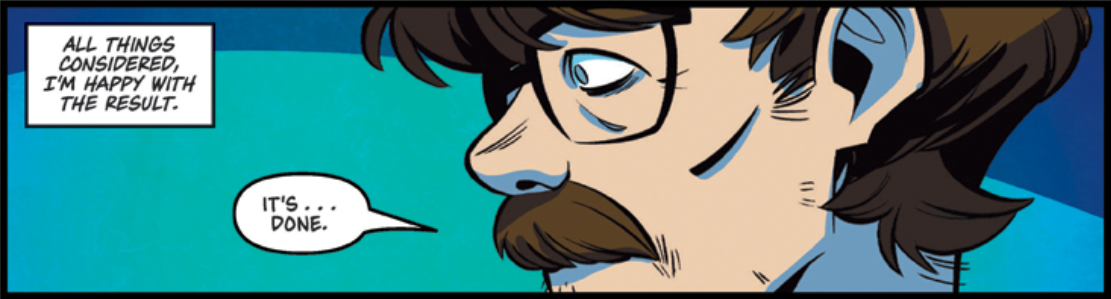
He’d used a combination of Pascal and C to write his code. What he did was unusual, and some might have called it slapdash as he hurried to get the robot finished. He took several shortcuts that any other programmer would have frowned upon, but he was happy with the result.
David was happy, too.
After twenty-two days of feverish work, Edwin was about to boot up his creation for the first time when David and Tiger zipped down the back Staircase slide and trotted over to Edwin. David charged up to Edwin and leaned against his dad’s leg.
David wrinkled his nose. “Daddy, you stink,” he announced.
“Thank you for pointing that out,” Edwin said.
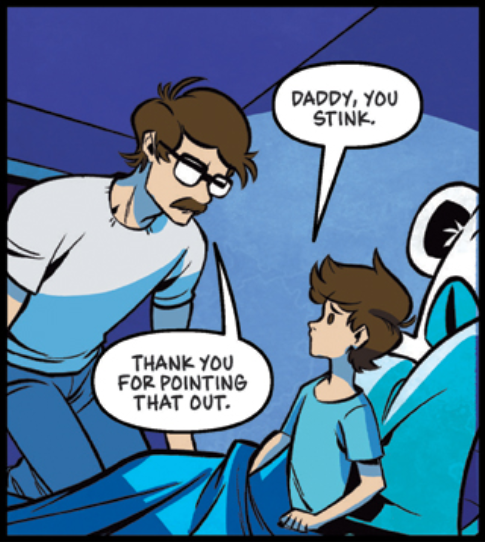
His son was right. Between taking care of David and building his brainchild, Edwin had let a few things fall by the wayside. Personal hygiene was one of those things. His breath, he suddenly realized, was stale, and his armpits might have been lethal.
But none of that mattered. It was done.
“Check this out,” Edwin said to David.
Lifting the endoskeleton off the table, Edwin set it on the floor in front of David. Then Edwin sat down cross-legged next to it.
David plopped down next to his dad. “What’s its name, Daddy?” David asked, studying the endoskeleton’s face.
Edwin also looked at his creation’s face, wondering how a four-year-old boy would see it. He glanced at David as he realized that the endoskeleton’s features might have been scary for a little kid.
Given what Edwin had been able to work with, he thought the endoskeleton’s head had turned out pretty well. Edwin’s first attempt to form the skull had started with simply placing two large white doll’s eyes within the boxy confines of a piece of metal housing he’d scrounged from a broken-down compressor. Because the square top looked nothing like a real head, though, Edwin had tried again. He’d found a rounded bit of metal in the guts of the Leavers Machine, and he’d used it to form a narrow protuberance that jutted up from between the big white eyes. Under the eye housing, Edwin had welded in place a hinged “jaw” that he formed out of parts of the Leavers Machine’s guide bars. Using a set of novelty chattering teeth he’d found in a box full of old bits and bobs on the third floor, Edwin had given his creation a big, white-toothed mouth.
Getting all this hardware connected to its programming required welding a large processor to the back of the skull and running a tangle of wires all around the skull. Wires stretched toward the back of the skull, dove in and out of both eye sockets, snaked through the mouth, and extended down the articulated neck that in turn connected with a metallic spine, which connected with a makeshift rib cage that was not as curved as Edwin had wanted it to be (but it worked), and the rib cage was linked to two robotic arms that ended in pincerlike hands.
Okay, so maybe the thing wasn’t pretty. In fact, its appearance was a tad disturbing.
David, however, didn’t look scared. His eyes were sparkling, and his head was cocked in what looked more like curiosity than any sort of trepidation.
“I haven’t given it a name,” Edwin said. He thought about the program he’d written. He’d called the program Mimic1.
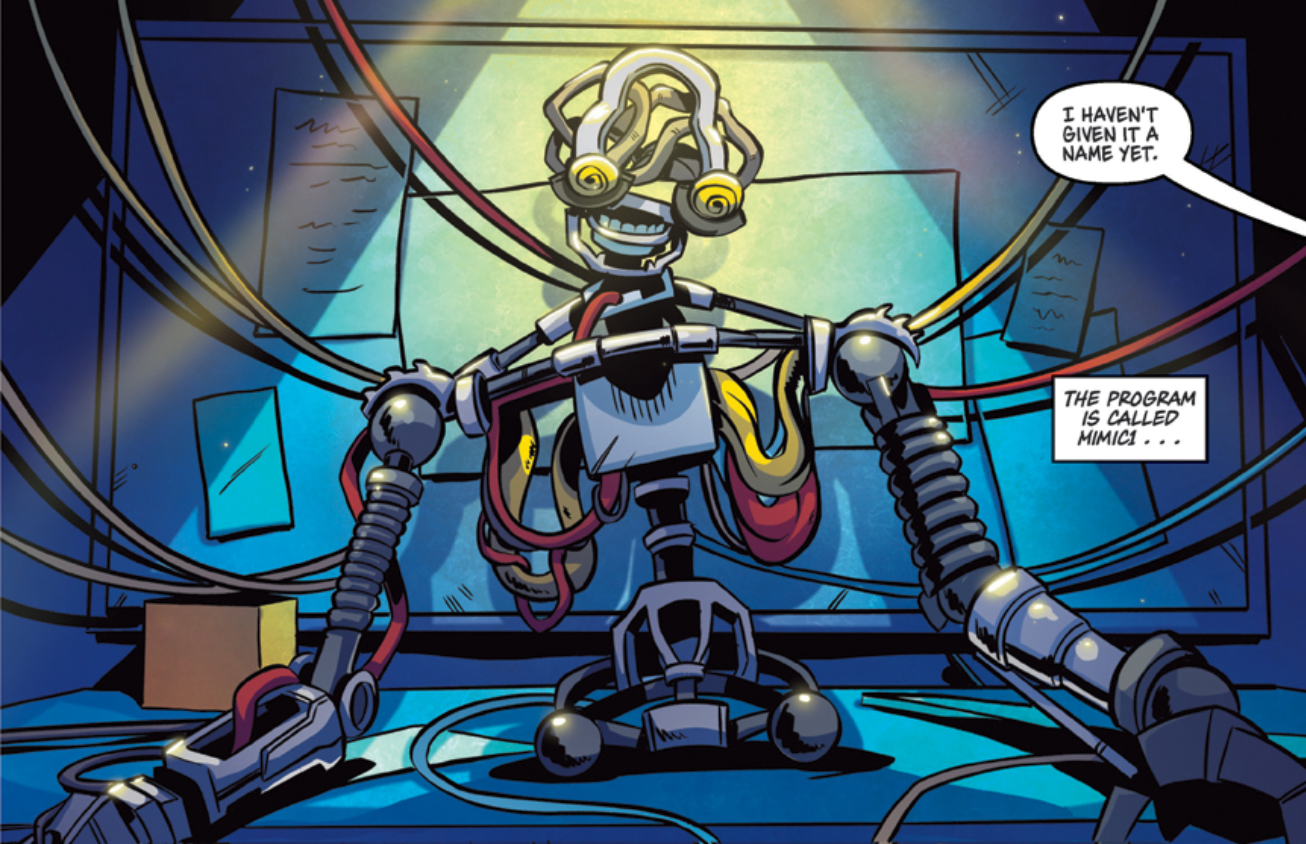
Well, that would work.
“How about Mimic?” he suggested.
David made a face. “That’s a weird name, Daddy.”
Edwin had no response to that comment.
“But I like it,” David continued. “Mimic.” He nodded. “Yeah, that’s okay.”
“I’m glad you approve,” Edwin said.
David shifted position and frowned. “What does it do, Daddy?” David asked.
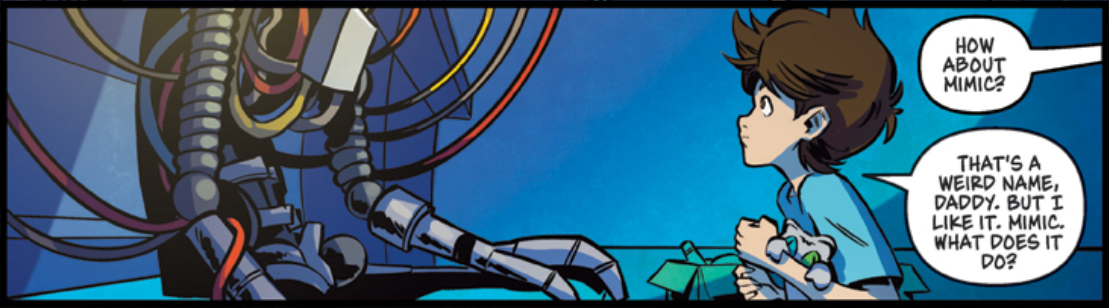
“Well, let’s find out,” Edwin said.

Taking a deep breath, Edwin reached behind Mimic’s neck and activated it. Mimic’s eyes lit up. They fluttered. Its mouth opened and closed.

David leaned forward, rapt.
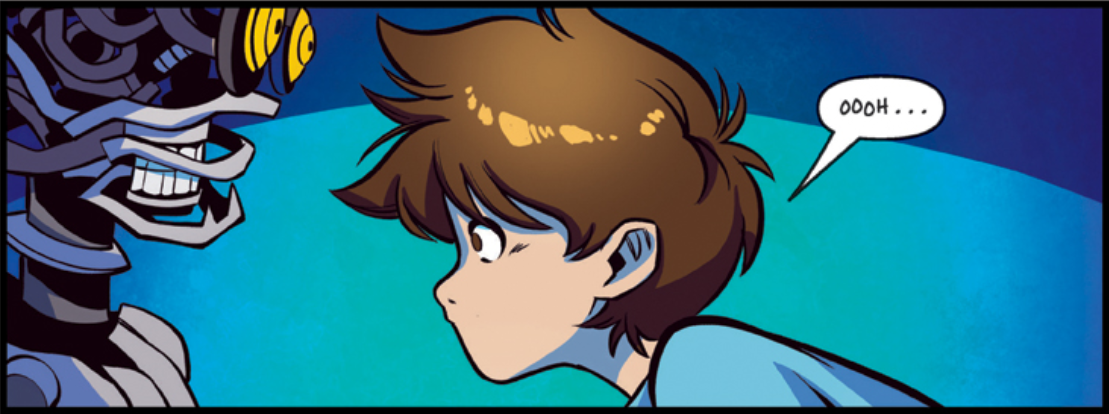
In slow motion, Mimic leaned forward.
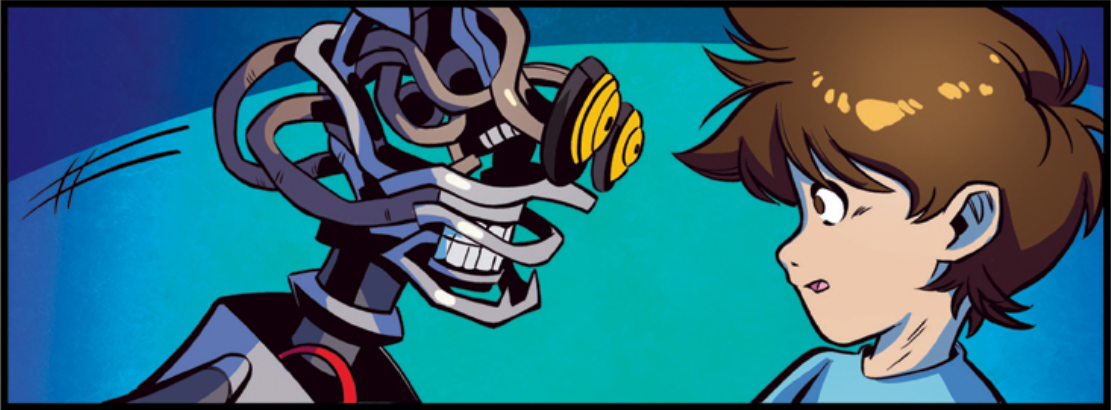
Startled, David whipped his head back and hugged Tiger. But he giggled.
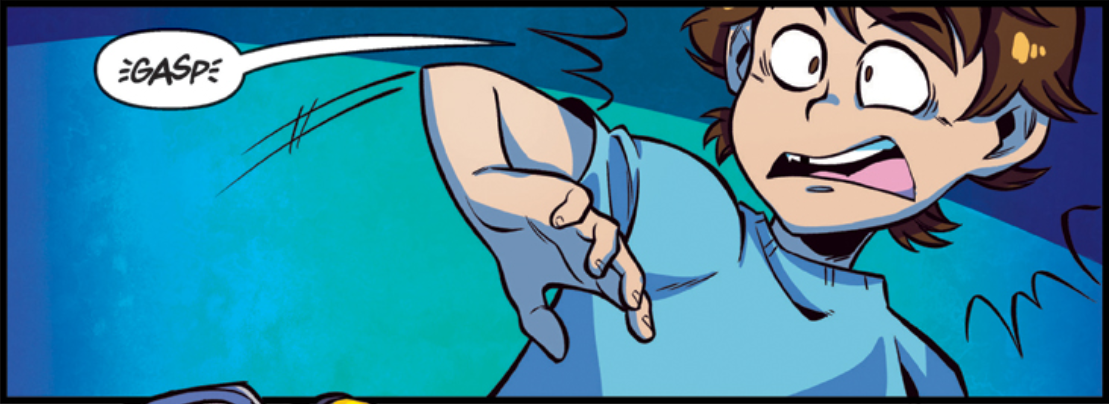
Mimic, still moving slowly, pulled its head back and pantomimed hugging a tiger-size invisible object. David giggled again.
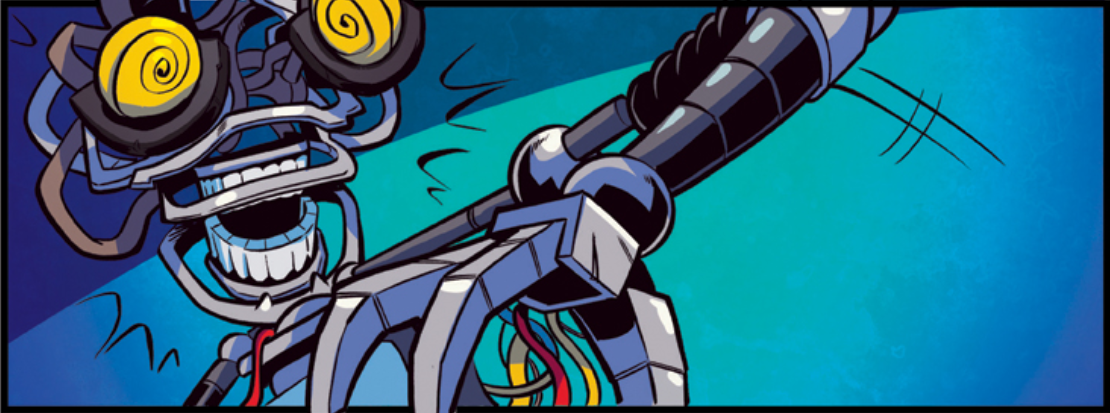
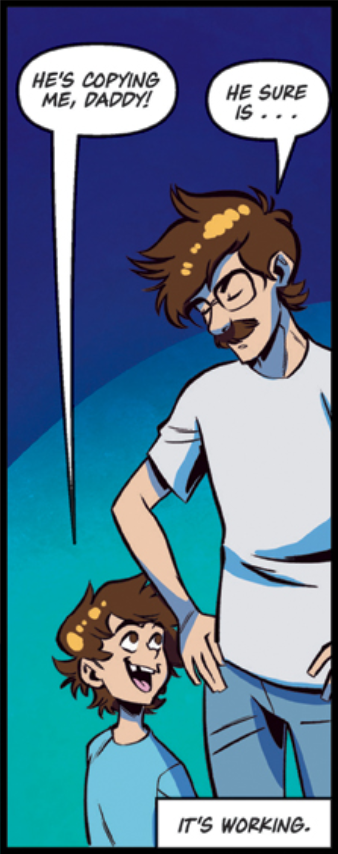
“He’s copying me, Daddy!” David said, clearly delighted.
Edwin smiled. It—he—sure was. Mimic was working!
David put out a finger and touched Mimic’s chest. Mimic put out a pincer and touched David’s chest.
David set down Tiger. “Wanna play patty-cake?” David asked his new friend.
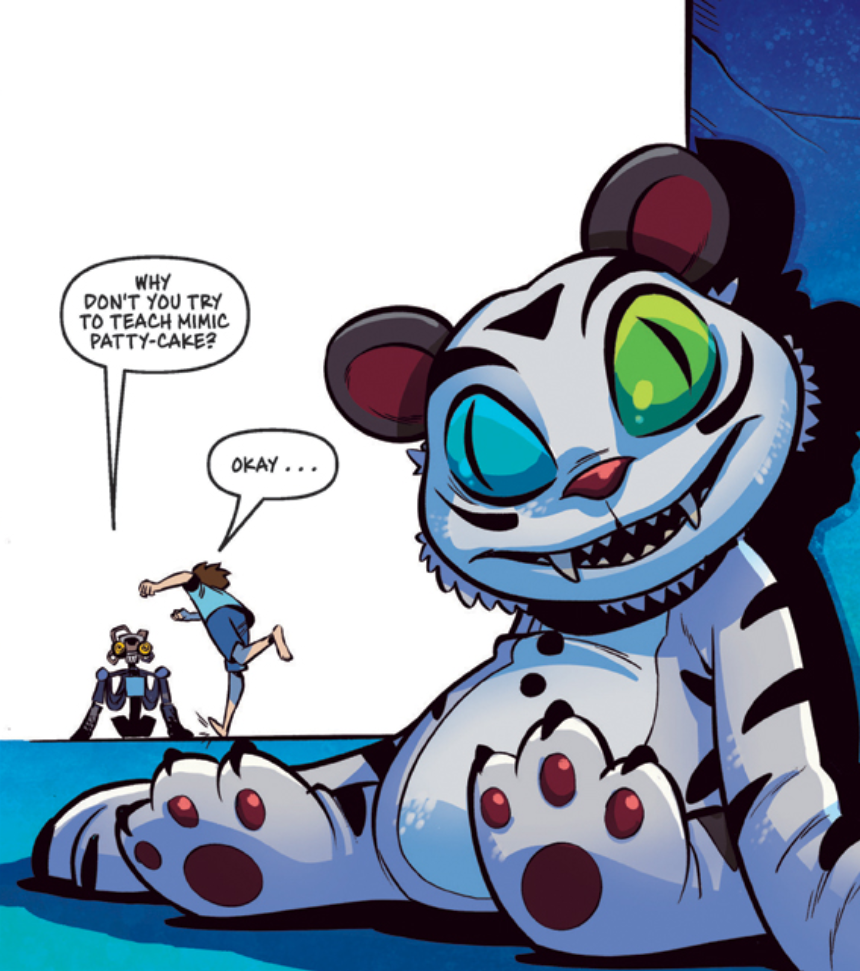
Edwin blinked in surprise. He’d played the clapping game with David when David was much younger, but they hadn’t played in a couple years. David, however, clearly remembered the game.
On some level, apparently understanding that he had to show Mimic what to do, David clapped his hands slowly and then put his hands out, fingers up, palms toward Mimic. Mimic matched the movements as best he could. He spread his pincer fingers to approximate David’s hand position. David clapped again.

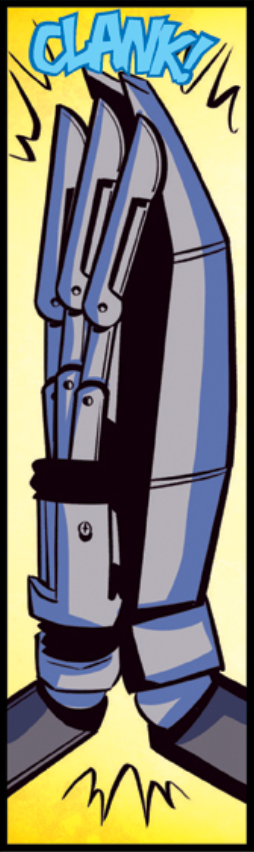
Mimic brought his pincers together with a metallic clink.
Edwin closed his eyes and rolled his shoulders. He’d done it. Now, he could get back to work on his paying jobs.
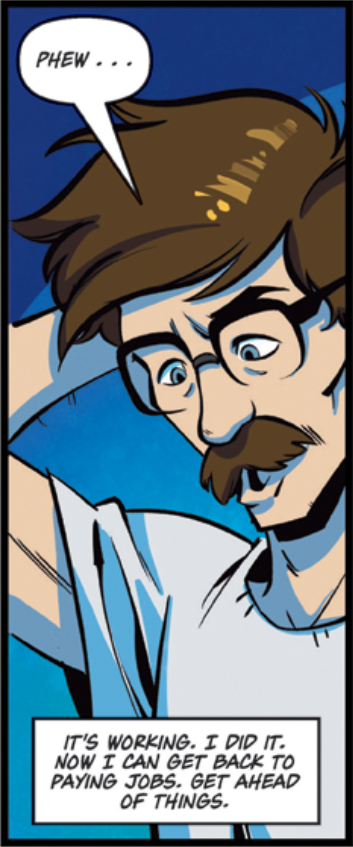
But first, he had to clean himself up.

Edwin opened his eyes and looked at David, who was still teaching a complex version of patty-cake to his new friend.
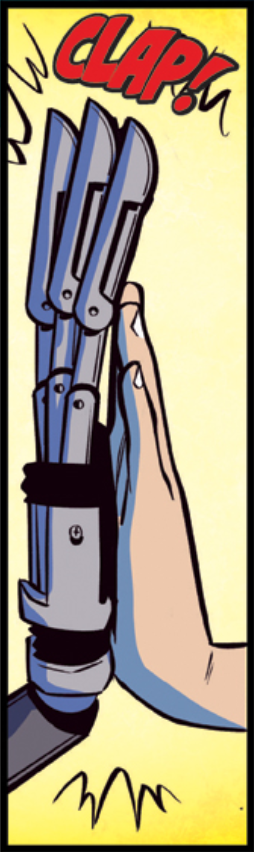
“David,” Edwin said, “How about we take Mimic upstairs? You two can play while I take a shower.”
David stopped playing. He dropped his hands. Mimic did the same.
“That’s good, Daddy,” David said. “You need soap.”
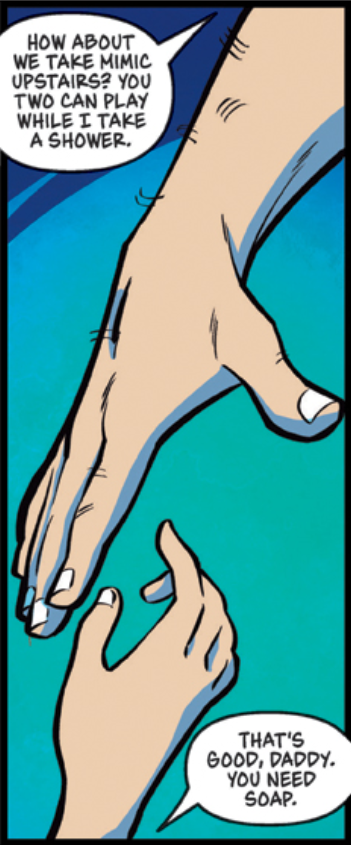
He pointed at Edwin, then put his fingers over his nose.
Edwin laughed as Mimic moved his pincers to the space that separated his eyes.
“Mimic agrees,” David said.
Edwin laughed harder and stood.
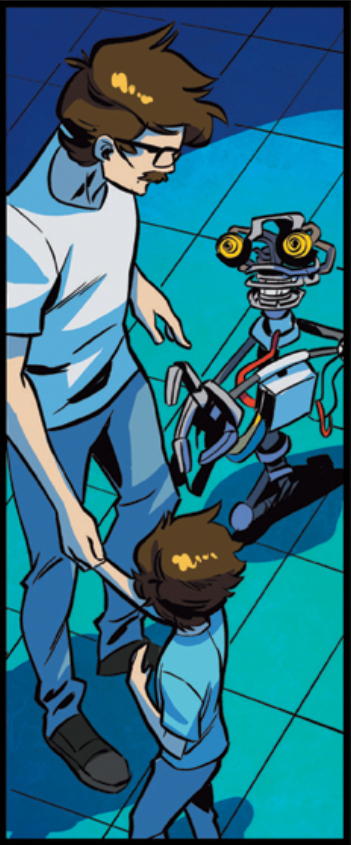
He leaned over and picked up Mimic as David jumped to his feet.
David took Edwin’s free hand. “I like Mimic,” David said.
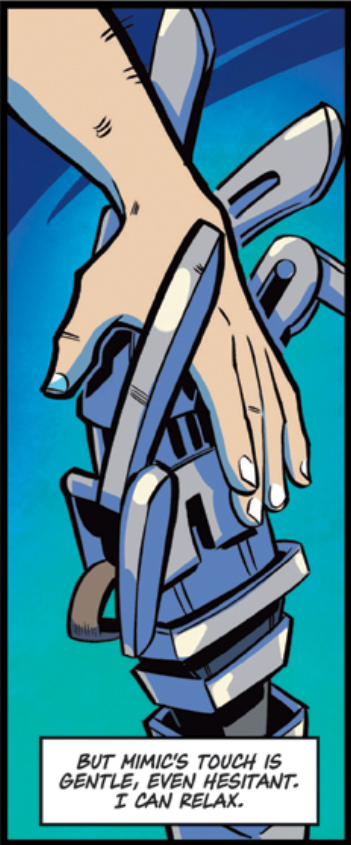
Mimic reached out and wrapped his pincers around Edwin’s wrist. The feel of the cold metal against Edwin’s skin made Edwin stiffen for a moment. Some primitive part of his brain felt a surge of fear. Would Mimic clamp down and hurt Edwin?
No. Mimic’s touch was gentle, even hesitant. Edwin relaxed and took his son and his son’s new friend up the stairs.
The next two weeks were the best Edwin could remember having since Fiona had died.
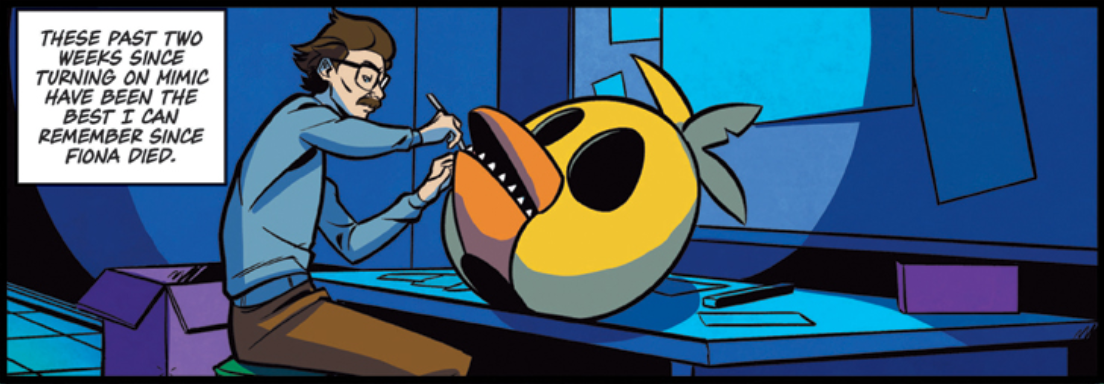
After catching up on some sleep the first night Mimic was completed, Edwin woke up energized and ready to go back to creating the characters Fazbear Entertainment wanted.
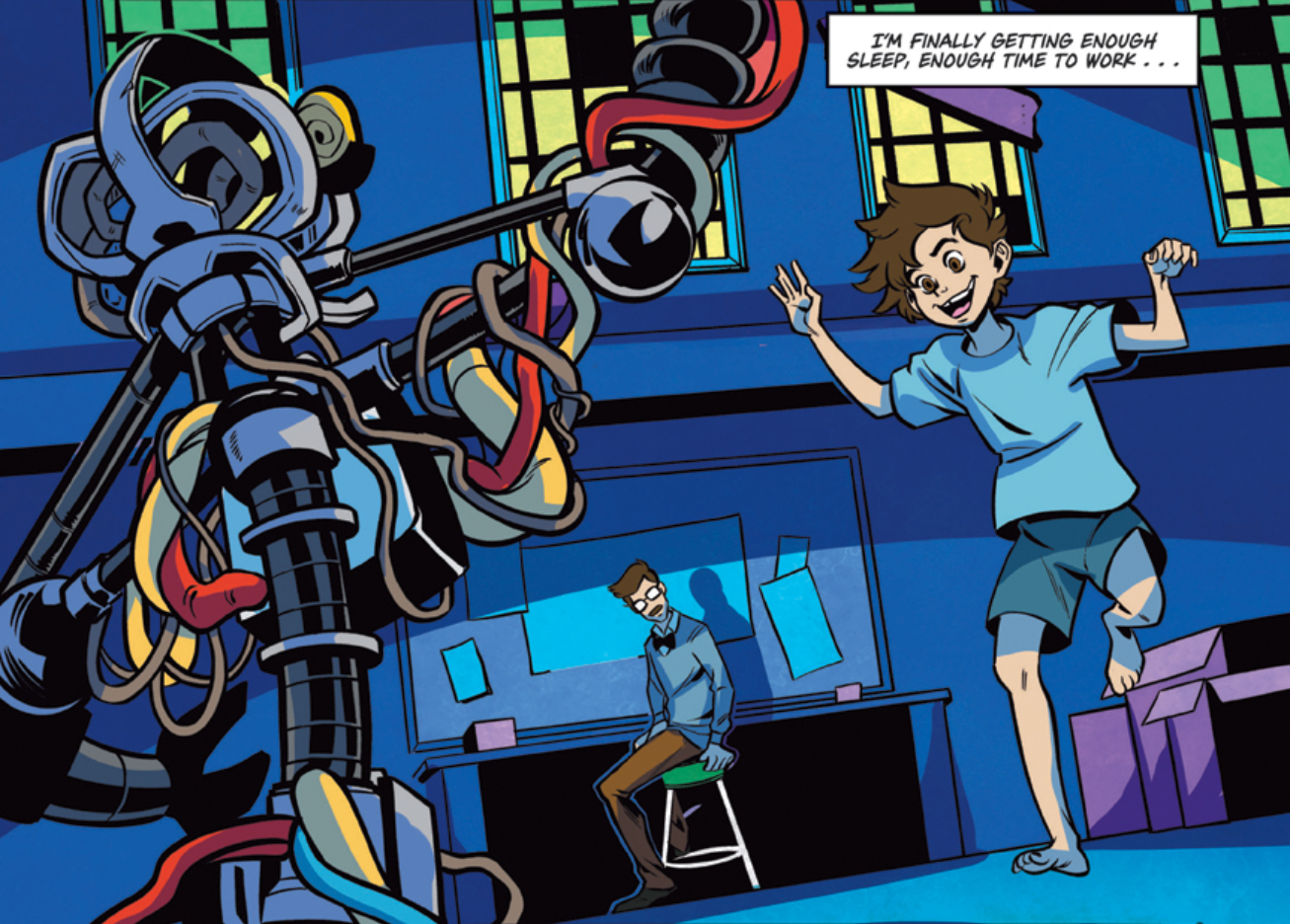
And because David was occupied with his new friend, Edwin had long stretches of uninterrupted work time.
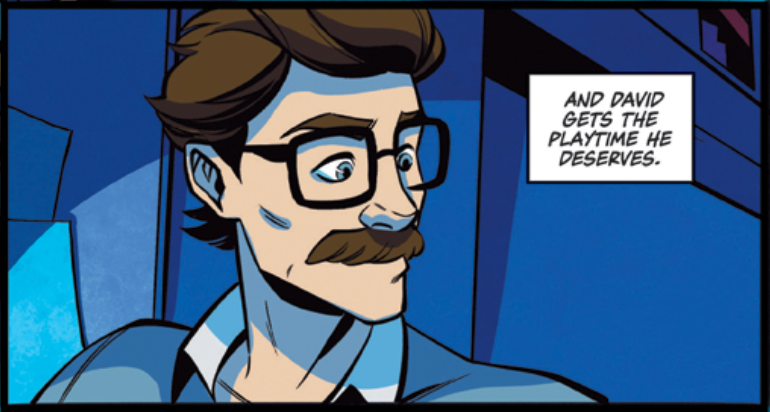
It was fantastic. It was amazing how much he could get done when he wasn’t interrupted every other minute.
When Edwin had programmed Mimic, he hadn’t had the parts he needed to give Mimic the ability to speak. He’d been concerned that this would be a problem for David, but he shouldn’t have worried. David had no issue with Mimic’s muteness.
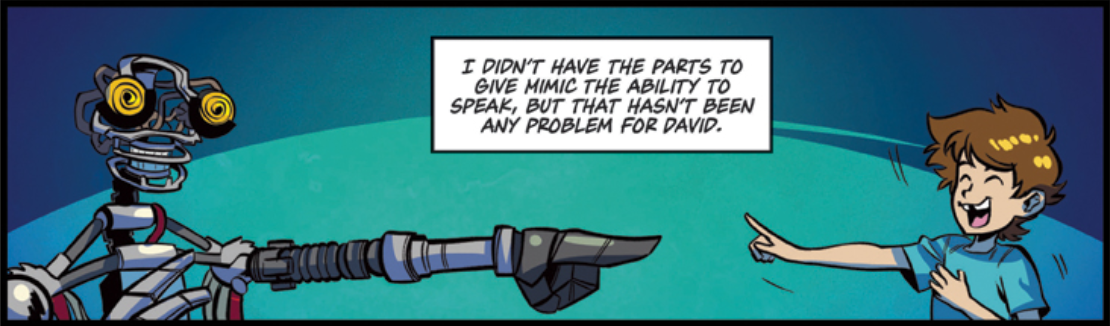
He started developing a sort of sign language to communicate with his robotic friend.
David’s sign language involved often hilarious imitations of the things he was trying to communicate. Ice cream, for example, was conveyed with a gesture that involved turning one hand into a bowl-like shape and using the other hand to approximate the shape of a spoon. David would dip the spoon hand into the bowl hand and put the spoon hand to his lips. Then, in what Edwin thought was adorably brilliant, David would rub the front of his chin as if ice cream was dripping there.
Mimic copied every move David made. This encouraged David to teach Mimic more and more things.
At first, what Mimic could do was somewhat limited. He could slowly copy David’s simpler movements. It was impressive for a robot held together with the engineering equivalent of two pieces of tape, but it wasn’t a replacement for a friend.
So Edwin tinkered with Mimic, to make sure that David wouldn’t get bored. Edwin wanted Mimic to be able to move as smoothly as possible. He still wasn’t sure how Mimic was learning so quickly, but he was very pleased by this development. Edwin was even starting to kick around ideas for how he could use the evolving program to get his company back. The Mimic1 program, if it matured as Edwin hoped it would, could be applied to many tasks.
The first time Edwin realized he hadn’t checked on David for hours, he was shocked. It felt irresponsible, almost. For all he’d known, David could have left the building. But he hadn’t.
When Edwin looked up from finally finishing the giant chick robot that he’d been working on, he found David and Mimic on the floor, coloring. Mimic was actually using crayons.
Mimic’s use of the crayons was clumsy, and he definitely didn’t color inside the lines. But David didn’t, either. David had always been prone to coloring the entire page. Mimic did that, too.
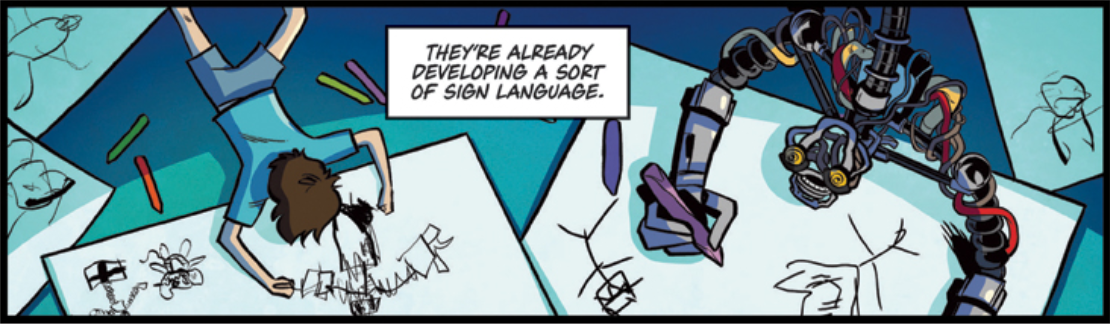
Later that same day, Edwin’s concentration was broken by a rhythmic thwacking sound. At first, the sound was just enough to make him frown, but as it got louder and was joined by David’s giggles, Edwin grumbled and looked around.
A few feet from his worktable, Edwin spotted David and Mimic tossing a red rubber ball back and forth. Because David wasn’t all that good at throwing or catching a ball, the ball frequently missed its target and bounced across the floor. Undaunted, David scampered after it, retrieved it, and tried again. Mimic’s throws, because they were a copy of David’s, were just as inconsistent, but David was clearly delighted by the clumsy game of catch.
Edwin smiled. Although the noise was distracting, at least David was content. Edwin returned to his work, satisfied that Mimic was doing what Edwin had designed the robot to do.
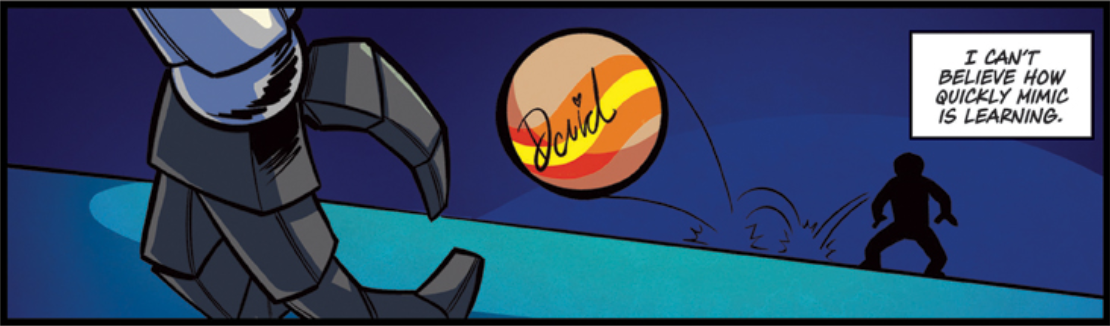
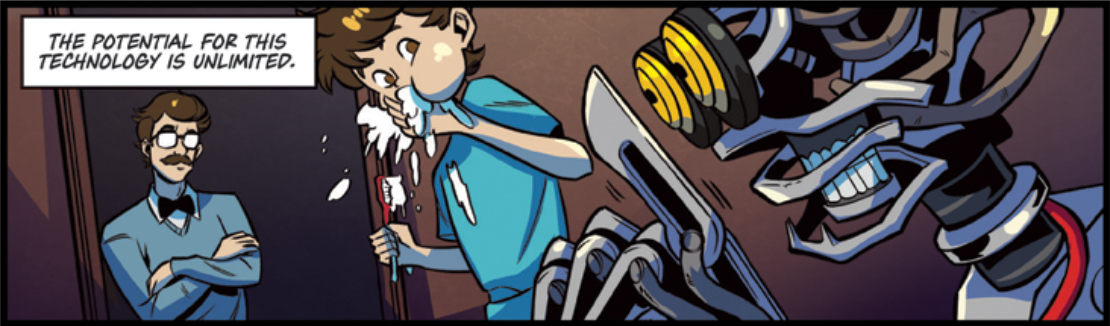
Mimic went everywhere that David went. He sat at the table when David ate. He perched at the edge of the sink when David brushed his teeth. And all the while, he copied all David’s motions.

One evening, as they ate, David pushed his bowl of mac and cheese across the table so it was in front of Mimic.
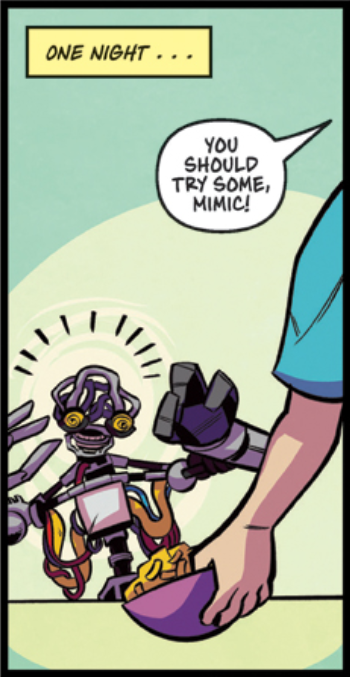
Mimic immediately took the spoon and scooped up some of the noodles.
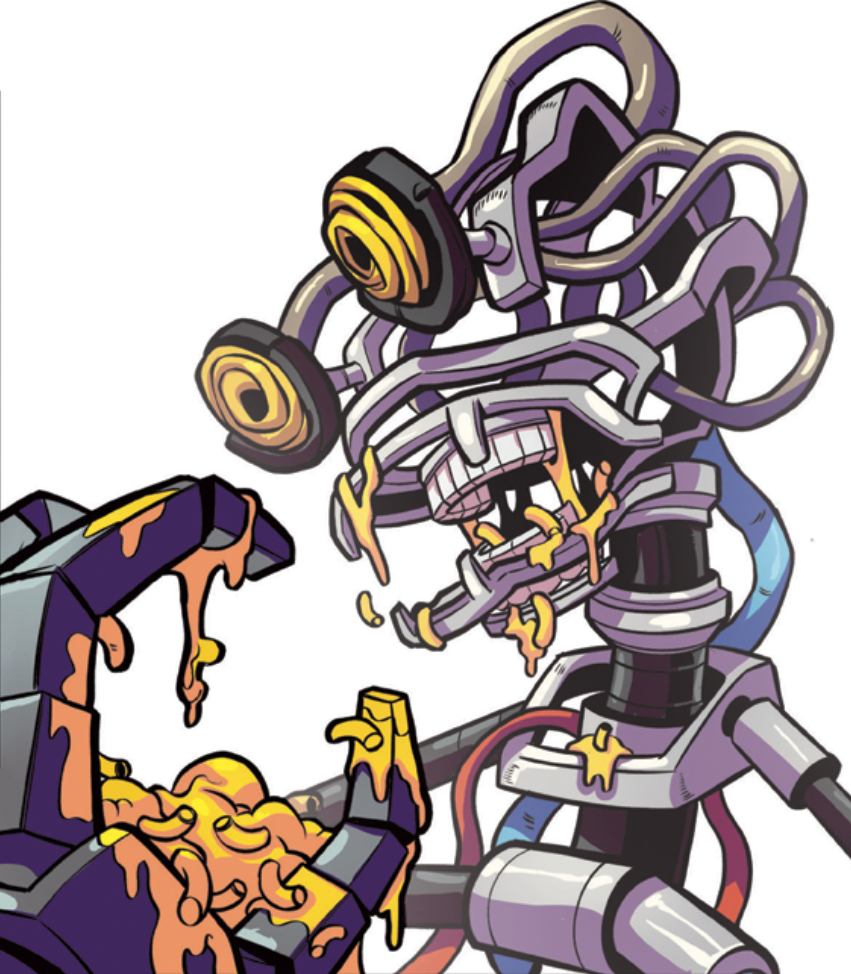
Edwin had to scramble to stop Mimic from dropping the mac and cheese through his open mouth. It wasn’t as if the food would hurt Mimic. It would have gone through the novelty teeth and out the opening behind them, tumbling down the back of Mimic’s neck. But Edwin didn’t want to scrub cheese off Mimic’s parts.
“Whoa there,” Edwin said to Mimic. “I’m afraid you’re not designed to digest food.”
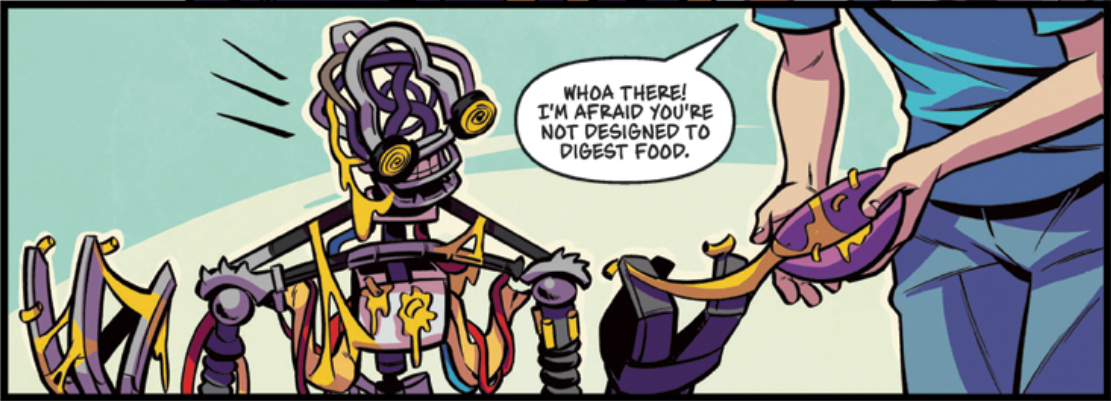
David thought this was hilariously funny. He was taking a sip of milk, and he laughed so hard that milk came out of his nose. Mimic opened his mouth and approximated the head-shaking, open-mouthed action of a laugh. David laughed even harder.
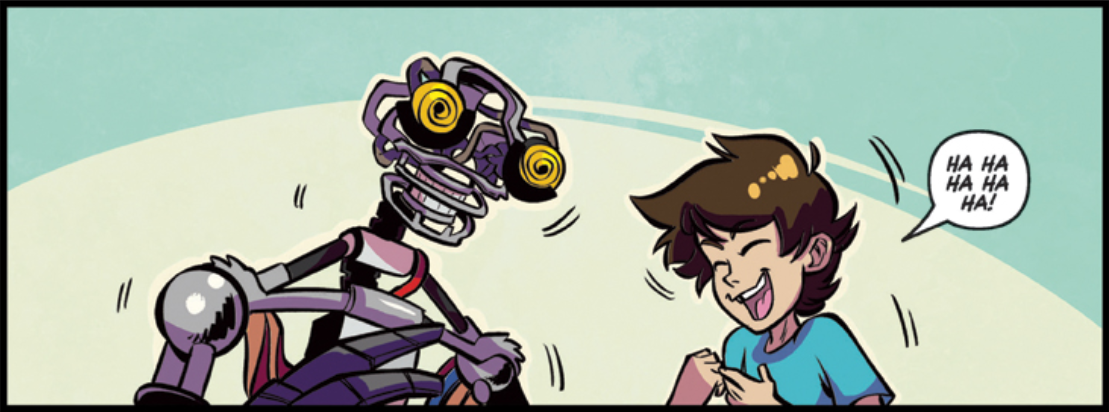
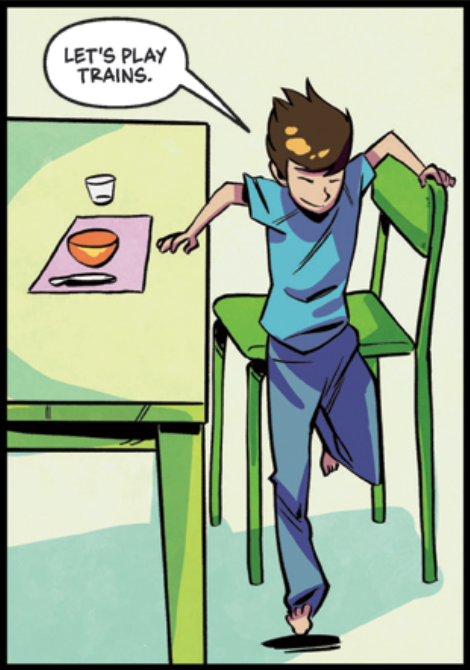
Then he jumped up and said to Mimic, “Let’s play trains.”
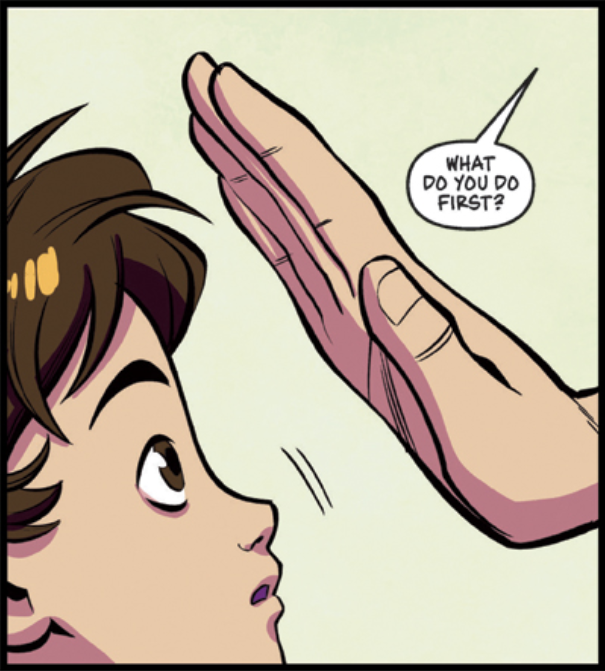
Edwin put his hand out in a STOP gesture and shook his head. “What do you do first?”
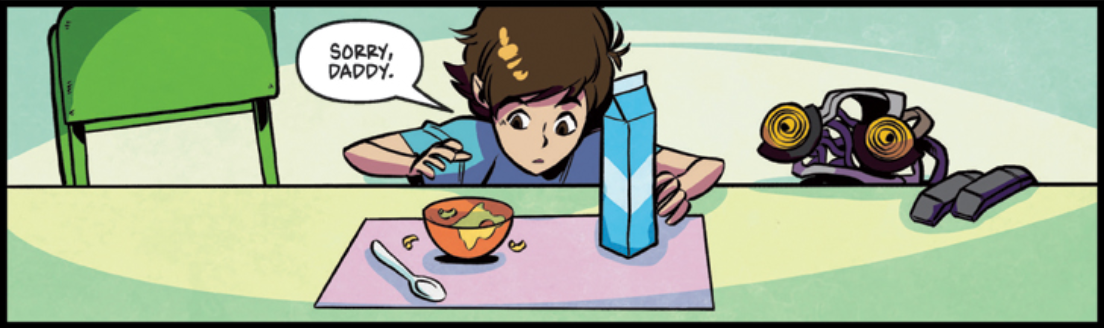
David looked up and to the right and twisted his lips, then he giggled. “Sorry, Daddy.” He turned to pick up the carton of milk sitting next to his plastic cup.
“Always put things away in the fridge,” he said.
Using two hands, David carefully carried the quart carton to the fridge and stowed it away.
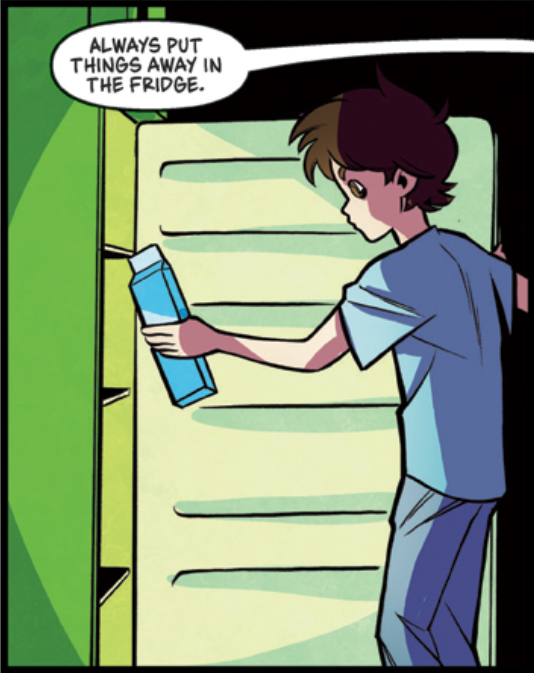
Mimic watched his every move.
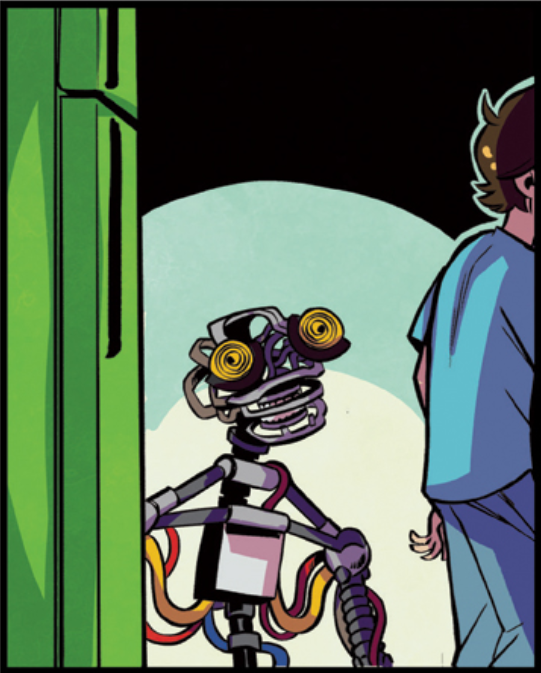
Because David always carried Tiger, Mimic usually had one of his arms curved in a way that suggested an invisible tiger. One day, David decided Mimic needed his own tiger.
“Can we buy Mimic a tiger?” David asked Edwin just before bedtime.
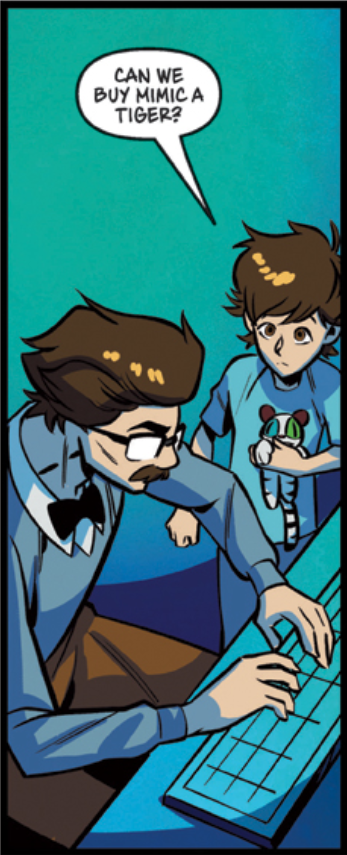
Edwin looked at Mimic’s inwardly curved arm. The gesture tugged at his heartstrings, but he shook his head. “Sorry, sport,” he said, “but money’s a little tight right now.”
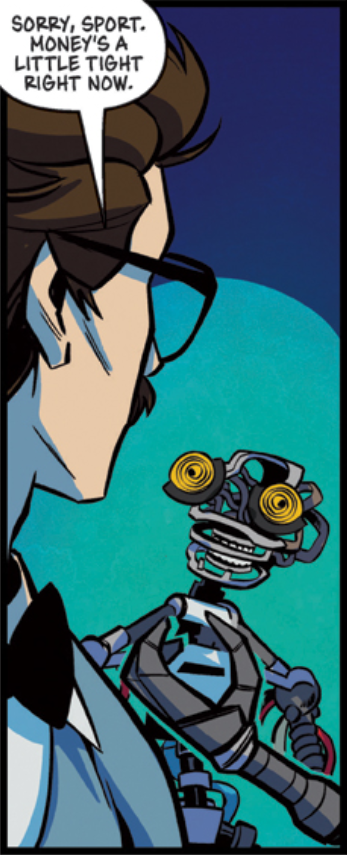
David had heard this often enough that he knew what it meant. He shrugged. “Okay.”
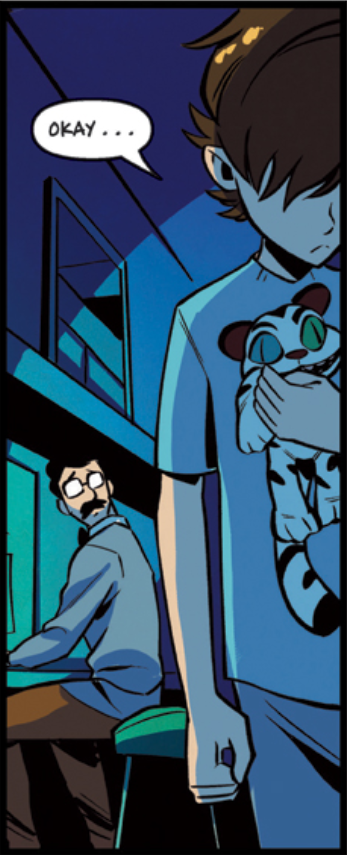
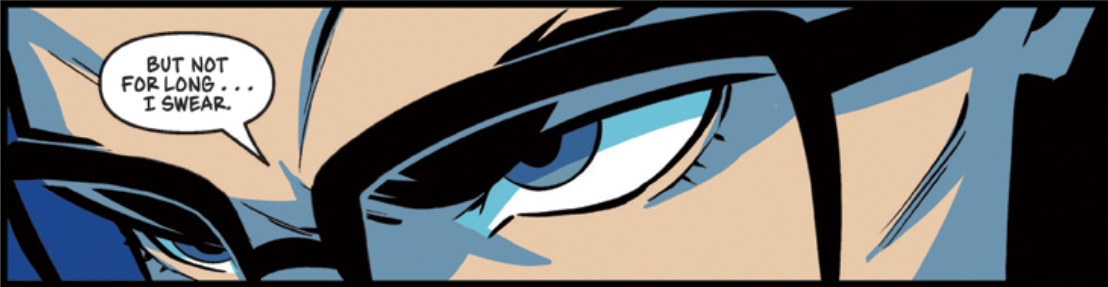
Later that day, when Edwin was finishing up the programming on a pirate fox character, he looked around and spotted David and Mimic by a pile of lace near the Leavers Machine. Both were bent over the lace, folding and refolding it.
Edwin got up and walked over to his son. “What are you doing?” he asked.
David looked up and grinned. Then he looked back at Mimic. “Is it ready?” he asked Mimic.
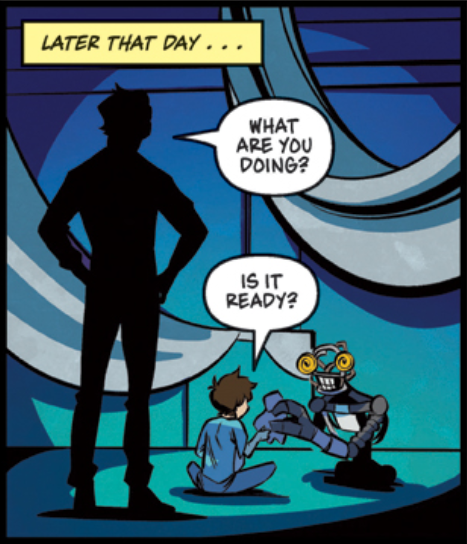
Mimic nodded.
Edwin’s brows rose. This wasn’t mimicking. It was responding. When had that happened?
David leaned back and pointed at Mimic. Mimic opened his mouth in his version of a smile.
Edwin blinked in amazement.
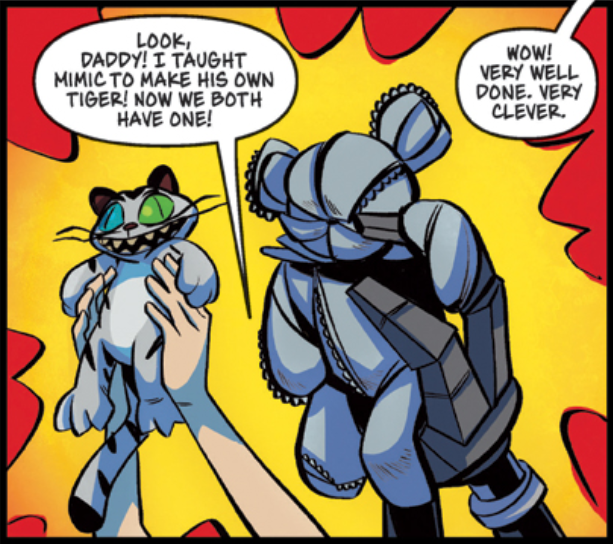
Cradled in the curve of Mimic’s left arm was an approximation of a tiger. It was made of lace and held together with string. David … and Mimic … had used the old material to form a head, a body, two arms, and two legs. They’d even managed to create little nubbins atop the head that looked like tiger ears.
“Now Mimic has a tiger, too!” David said triumphantly.
Edwin reached down and ruffled David’s hair. “Yes, he does. Very well done. Very clever.”
David beamed. Mimic’s eyes lit up brighter than usual.
Now even more confident that he could leave David in Mimic’s care, Edwin threw himself into his work.

He put in long hours, stopping only to feed David or answer David’s occasional questions.
The questions, however, weren’t as occasional as Edwin would have preferred. Although Mimic could entertain David in many ways, the robot couldn’t talk to the boy.
“Why do we have to brush our teeth, Daddy?” David asked one day when Edwin was trying to rush David through his morning routine.
“Because if we don’t, we get cavities,” Edwin said.
“What are ‘cavties’?” David asked.
“Cav-i-ties,” Edwin enunciated.
David repeated the word, correctly this time. “What are they, Daddy?”
“Holes in the teeth.”
David looked alarmed. “I can get holes in my teeth?” He pointed at Mimic. “He doesn’t brush. Won’t he get holes in his teeth?”
David had stopped brushing, and he waved his toothbrush. Toothpaste and water flew everywhere, including onto the clean shirt Edwin had just managed to get on his son.
Keeping himself and David in clean clothes was a challenge. Edwin had no washer or dryer in the factory. That was on his list of improvements to add once he got more money, but for now, he had to go to a laundromat. And he hated going to the laundromat.
“Stop that!” Edwin said. He shook a finger at his son. “Don’t be careless.”
David’s face screwed up. His lower lip quivered.
“Don’t you dare start crying,” Edwin snapped.
Of course, the command had the exact opposite effect of what Edwin wanted. David started crying. Turning away from Edwin, David hunched over. Mimic, perched by the sink, hunched over as well.
Edwin grabbed David by the shoulders and shook him. David’s cries turned to screams of rage.
“Oh, for heaven’s sake!” Edwin said.
He forced himself to take a deep breath. He knew better than to do what he’d just done. It was just that he had so much work to do, and he only wanted David to brush his teeth and go sit and play with Mimic. Was that too much to ask?
Edwin crouched down in front of his son. “David, I’m sorry,” he said. “I’m sorry I yelled.”
David wasn’t in a forgiving mood. He turned away from Edwin and reached for Mimic. Mimic wrapped his pincer hands around David’s fingers.
Edwin spent the next several minutes trying to calm David down. The whole time, he promised himself he’d do better by his son.
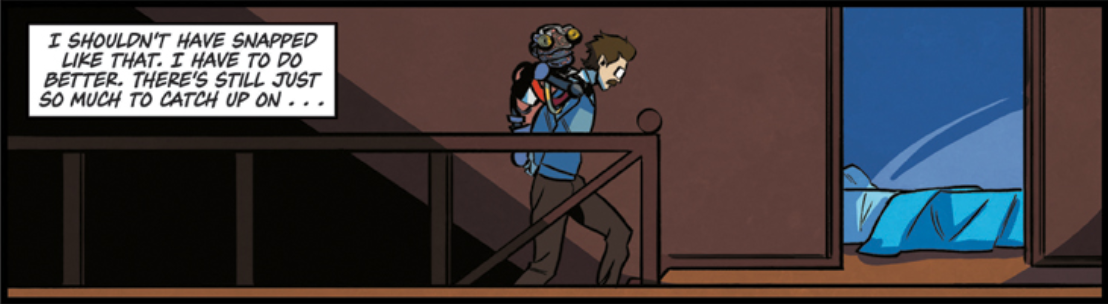
But he didn’t. His resolve fled him a mere ten minutes after the incident.
By then, David was wearing a fresh T-shirt with his brown corduroy pants, and he was bouncing up and down in anticipation of playing with his cars. Edwin looked at David’s rumpled bed and the zebra pajamas that lay crumpled on the floor next to it.
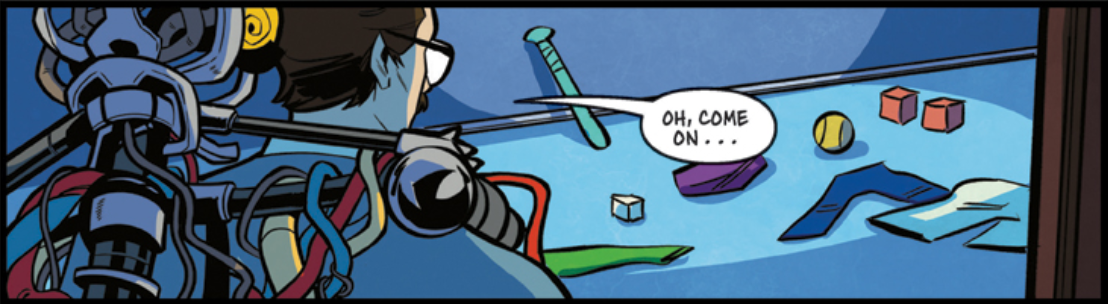
As David started to skip past Edwin, he grabbed David’s shoulder. He pointed at the pajamas. “What have I told you?” Edwin asked.
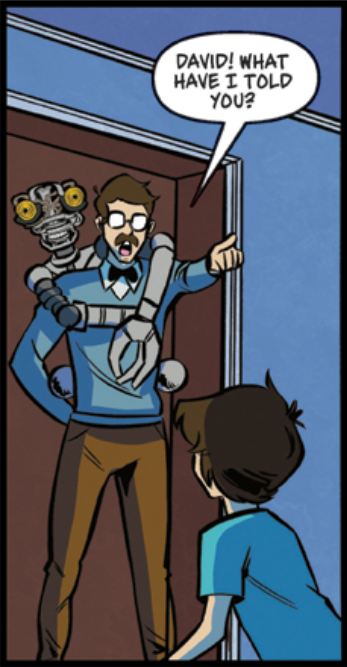
David looked up and to the right in his classic oops expression. “Sorry, Daddy.” He bent over and picked up the pajamas.
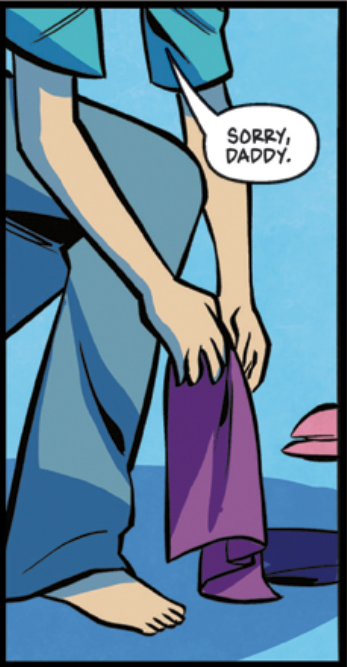
“Always put things in the closet,” he said.
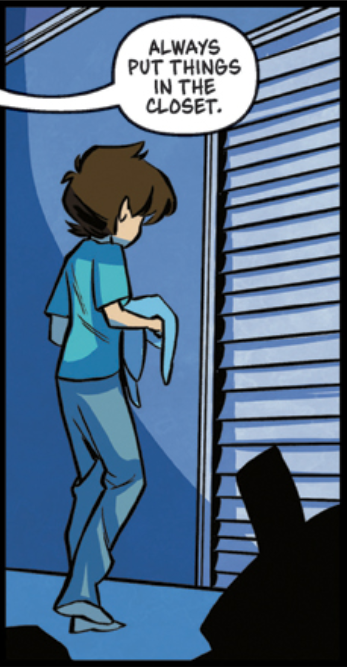
David opened the door leading to the next room and stowed his pajamas on the shelf next to a hanging rod of Edwin’s clothing. Mimic watched David the whole time.

For the next couple hours, Edwin was able to focus on work. But then his focus was abruptly interrupted.
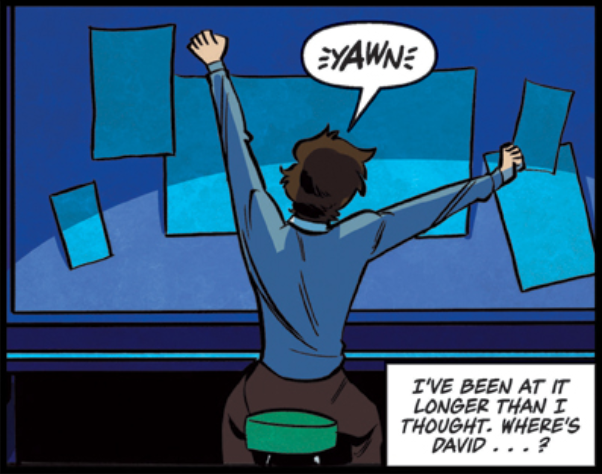
“Look at me, Daddy!” David screamed.
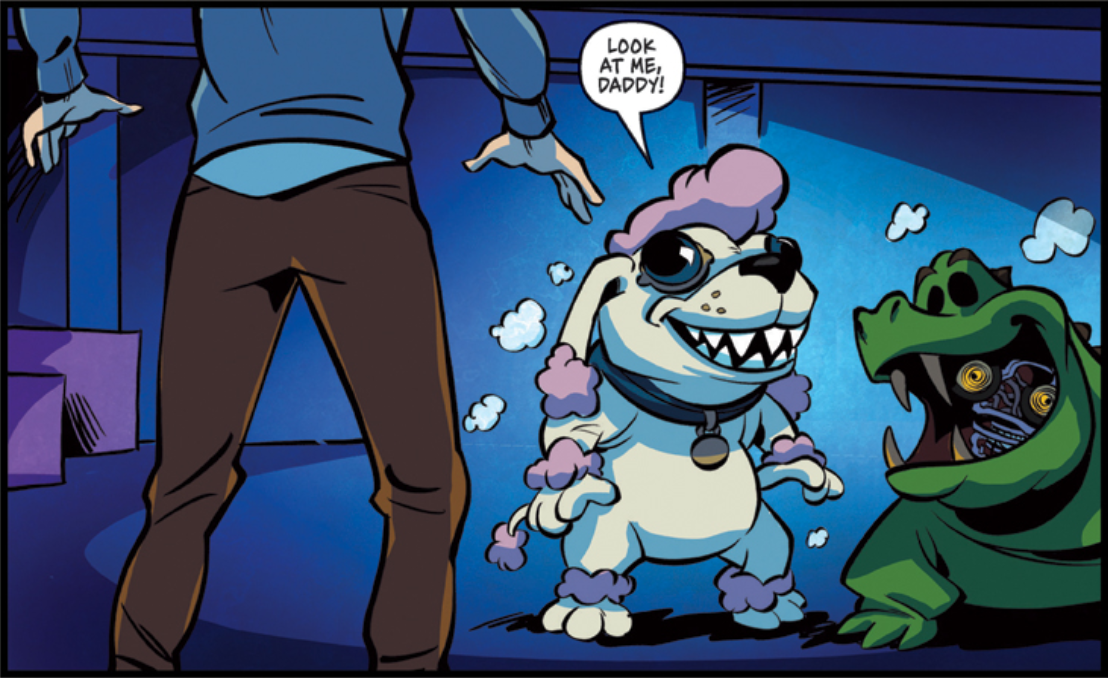
Edwin lifted his gaze from his task. His eyes widened.
“What do you think you’re doing?” he shouted.
David, clad in one of the costumes sent by Fazbear Entertainment, was no longer a little boy. He was a yellow dog frolicking around on all fours. Because the costume was too big for David, the dog’s limbs flopped all over the concrete. They were getting filthy.
And it got worse. Next to David, Mimic was stuffed inside the top part of a green alligator costume. It too was now dirty. Edwin was going to have to clean up both costumes … like he didn’t already have enough to do!
“Those costumes aren’t for play!” Edwin yelled.
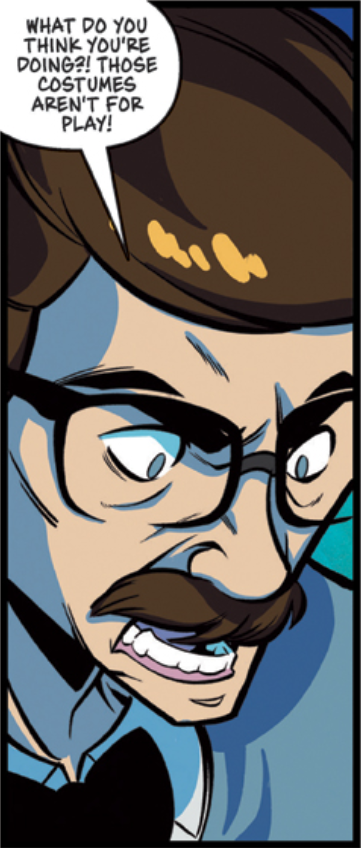
He shot up out of his chair and charged over to his son. Yanking David off the floor, he shook his index finger. “Get out of that costume right now!”
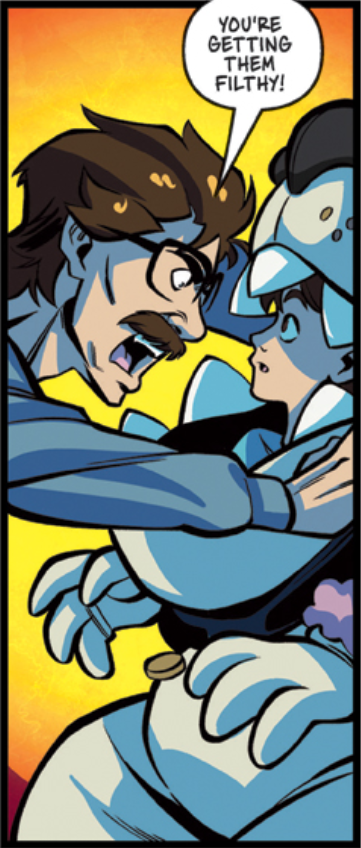
He turned toward Mimic. “You too!”
David, predictably, started to cry.
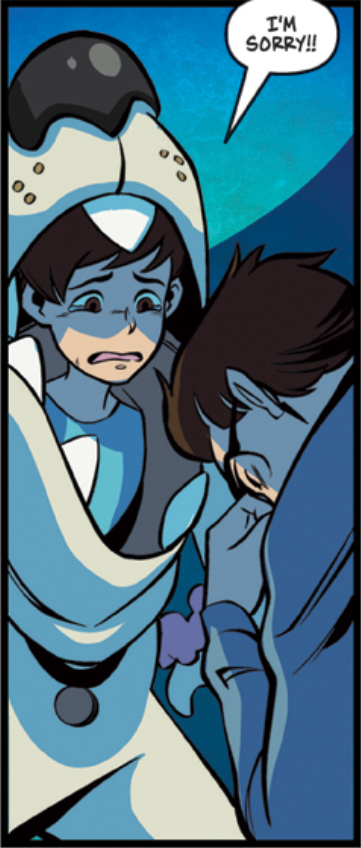
Edwin ignored the tantrum and worked on extricating his son out of the faux fur.
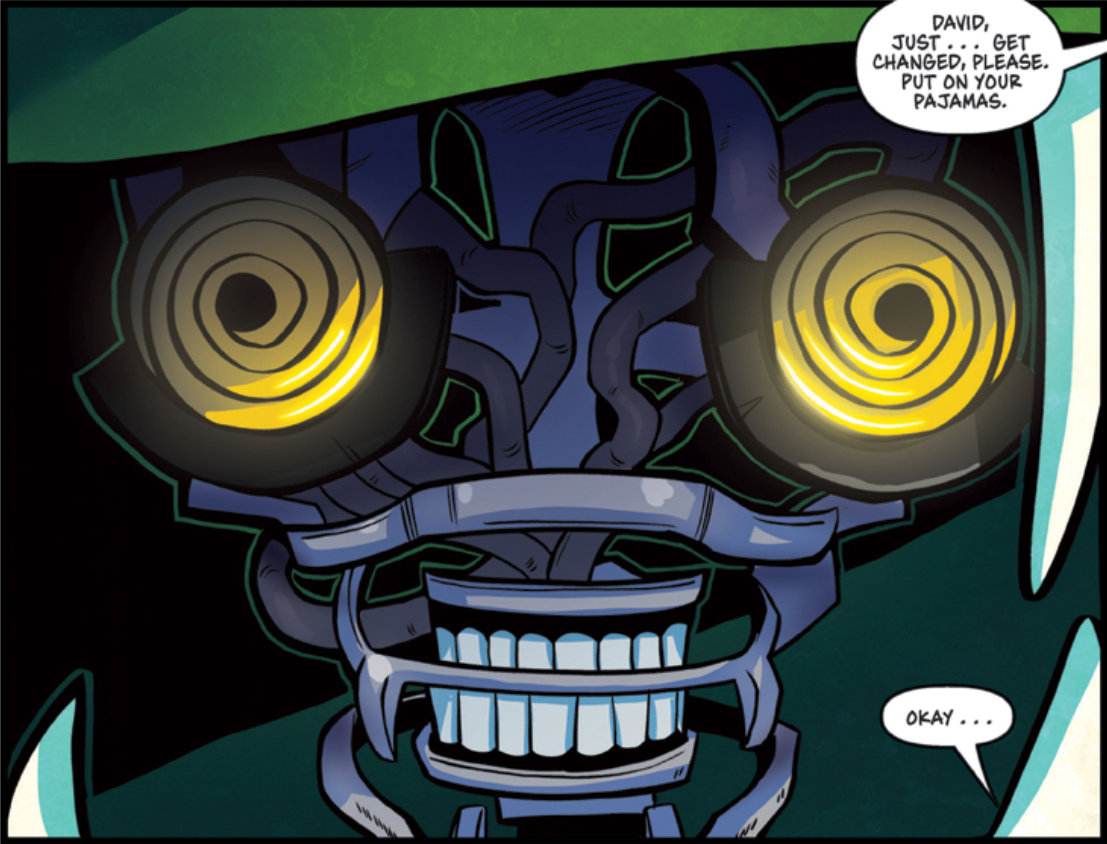
Once he had both child and robot costume free, Edwin placed Mimic next to one of the pillars. He pointed at David. “Now, go over there and play quietly.”
David sniveled. “Okay, Daddy.”
Setting aside the costumes to deal with later, Edwin returned to his work. But he only got in another half hour or so before he was interrupted again.
“Daddy, I’m hungry,” David announced when Edwin was right in the middle of doing a tricky soldering job.
David poked Edwin in the forearm. Edwin’s hand slipped. The solder blotched in the wrong place.
Edwin swore. “David! Watch what you’re doing!” Edwin crossed his arms and glared at his son. “You just made me mess something up. Now I have to redo it.”
David looked at his feet.
Edwin noticed Mimic gazing down at the bottom of his own legless torso.
“Sorry, Daddy,” David said.
Edwin took a deep breath and looked up at the ceiling’s exposed old oak beams. He watched a spider toiling in the middle of its web, which was monstrous, over three feet wide, anchored against one of the green pillars and stretching out to the top of one of the factory’s tall boarded-over windows. Edwin noted that the spider was alone. Unhampered by spiderlings, the huge black insect was managing far more productivity than Edwin was.
Edwin pulled his gaze from the spider and rolled his shoulders. He ruffled David’s hair. “It’s okay, David. But could you please play quietly with Mimic for a little bit longer while I finish what I’m doing here.”
“Okay, Daddy,” David said. He turned toward Mimic. “We’ll draw.”
A few days before, Edwin, while looking for a part on the third floor, had come across a box of construction paper in a variety of colors. He’d carried the reams of paper down to the first floor and shown it to David.
“You can use this to draw whatever you want,” Edwin had said.
“Neato, Daddy!” David had said.
Since then, David and Mimic had been doing all manner of odd little drawings that were surrounded by markings that looked vaguely like hieroglyphics. When Edwin had asked David what they were, David had shrugged. “It’s made up, Daddy.”
It might have been made up, but it riveted David and Mimic. So now, David pulled out more paper, and he and Mimic began scribbling more drawings and symbols. Edwin, both amused and baffled by his son’s creative efforts, turned back to his work.
As Edwin finished the soldering job, he resolved to make time to tinker with Mimic after David was asleep later. This was something he’d been doing regularly since he’d created Mimic. He kept tweaking Mimic’s functionality so Mimic could do a better job of entertaining David. Clearly, however, it needed more work. As the rainy spring days continued, David was getting more and more restless.
Perhaps if Mimic was a bit more mobile, Edwin thought.
That night, after tucking David into his cot near Edwin’s worktable and watching Mimic copy David’s big yawn and the little eye rub that always preceded settling in with Tiger for sleep, Edwin picked up Mimic and carried him over to the long worktable.

There, he worked at updating Mimic’s program so Mimic could use his arms and lower torso more fluidly. This new agility would give Mimic an expanded ability to play with David. Mimic would be able to scoot along the ground, in approximation of the way David often butt-scooted across the floor when he was playing. He also would be able to get himself up and down stairs.
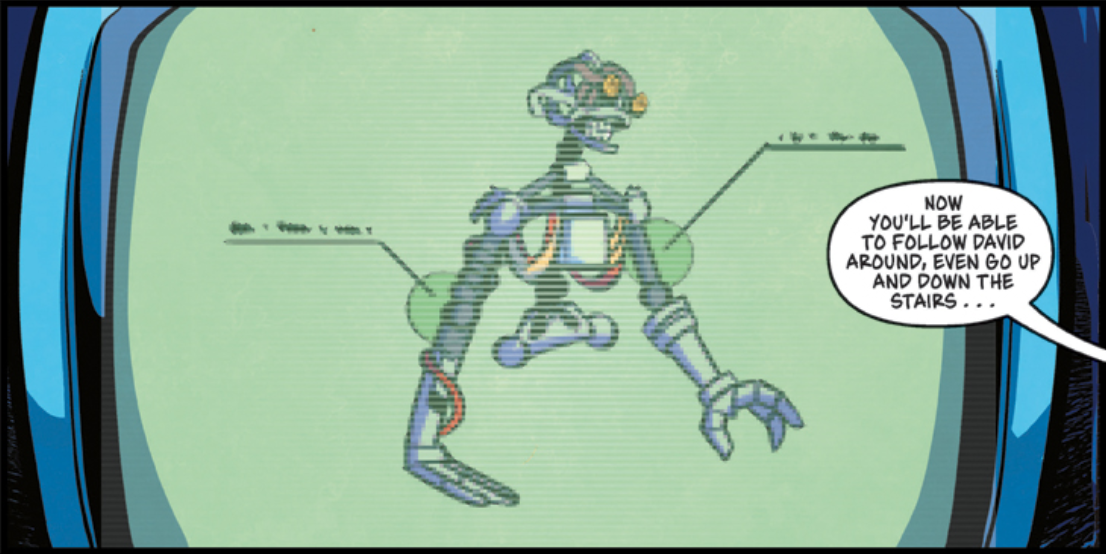
And he’d be able to throw the ball farther and retrieve it as well. Edwin also adjusted Mimic’s processors so that Mimic could continue to execute more and more complex tasks.
There, Edwin thought when he was done. That should give him more time to focus on his work.
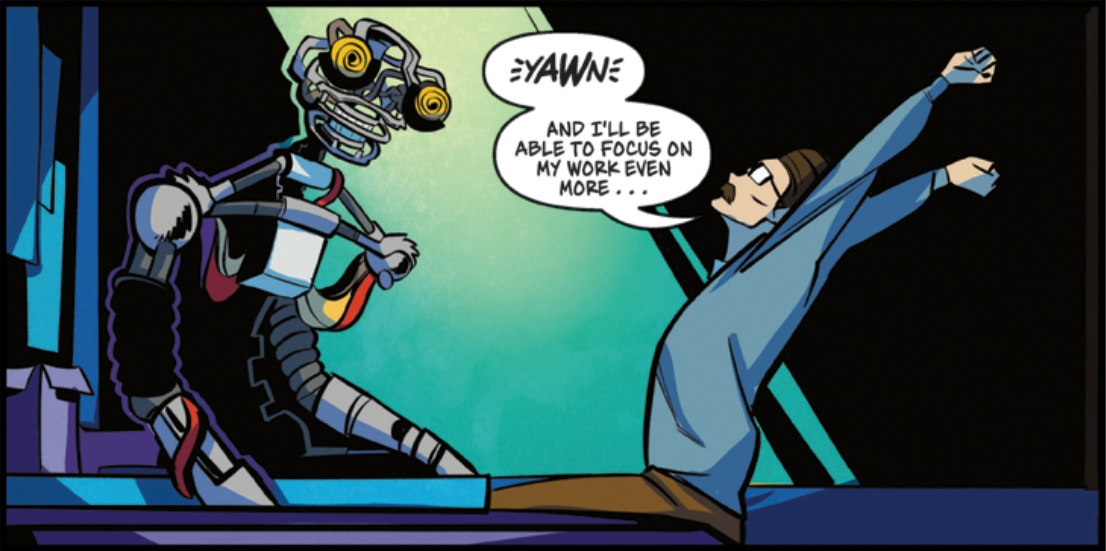
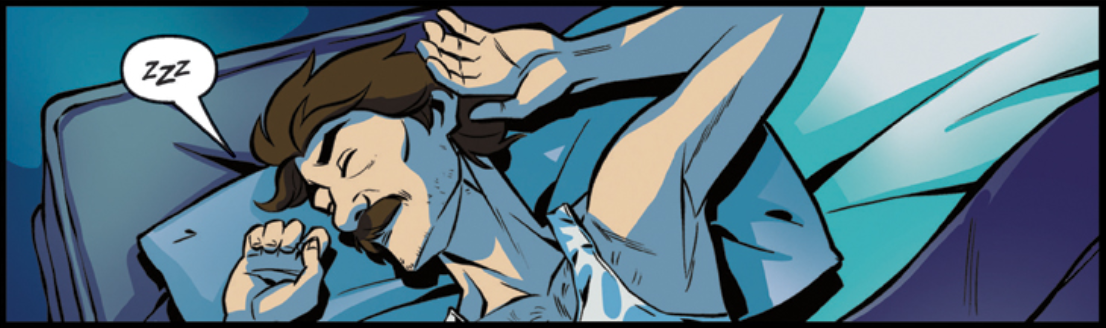
And Edwin could do more while David slept, too. Rubbing away his exhaustion, Edwin returned to the latest project he was doing for Fazbear Entertainment. He worked until just before dawn and then carried David, still sleeping, up to the apartment. There, Edwin dropped into bed himself and fell into a restless sleep.
Two hours later, Edwin awoke abruptly when his excited son landed on his stomach and screamed, “Sunshine, Daddy! Let’s play catch!”
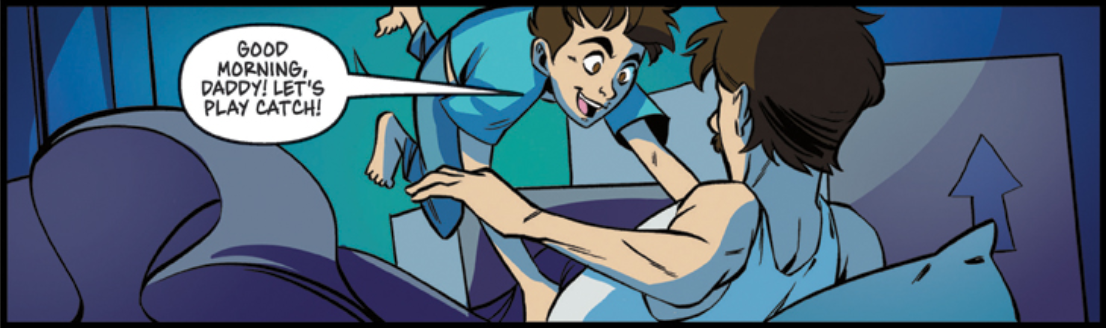
Trying to get back the breath that had been stolen from him when David’s full weight had hit his solar plexus, Edwin blinked at the vivid yellow ray of sun that was streaking in through the closest window, beneath a shade that Edwin hadn’t bothered to lower the night before.
David began bouncing up and down on Edwin’s stomach.
“David!” Edwin shouted. “Cut that out!”
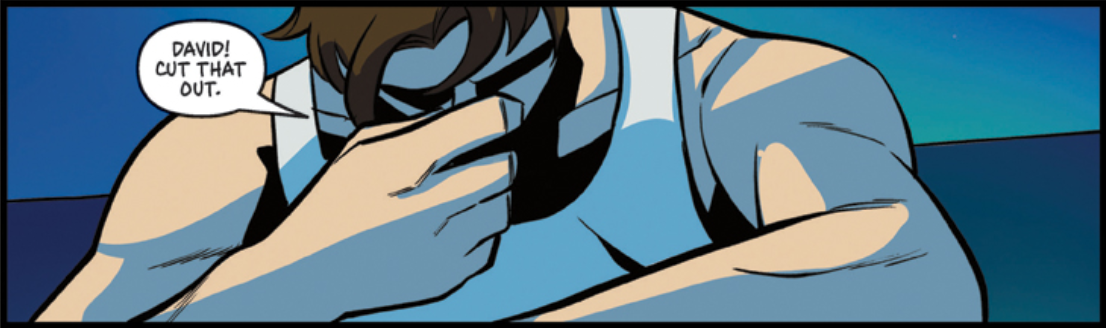
David slid off his dad. Edwin took a deep breath to refill his lungs.
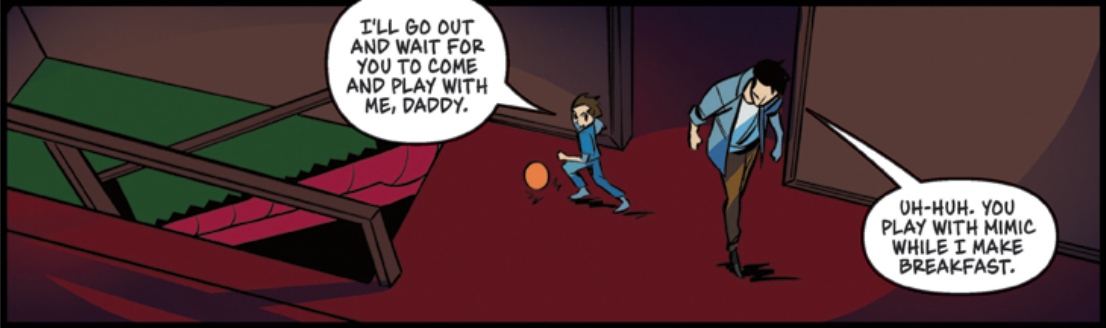
“I’ll go out and wait for you to come and play with me, Daddy,” David said.
Edwin nodded vaguely, only half processing what David had said. Edwin sat up. As he put his feet on the floor, he heard David slide down to the factory’s first floor.
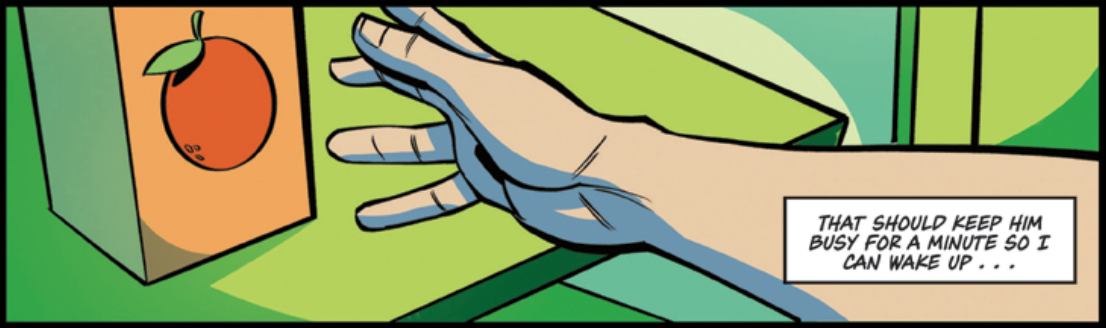
Good, Edwin thought. Mimic was down in the workshop. He’d keep David occupied while Edwin grabbed a quick shower and make breakfast.
Edwin stood and headed toward the shower. He started thinking about how he was going to tackle the next part of his current project.
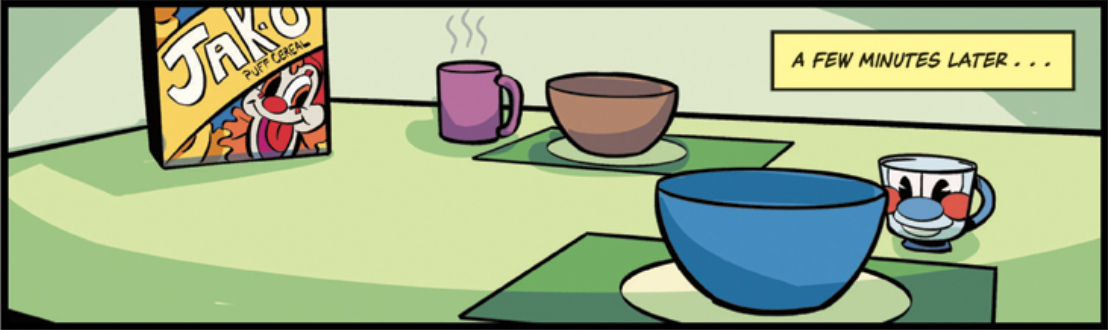
Edwin was still thinking about his plans as he set out bowls and spoons, a box of cornflakes, and a carton of milk.
He continued to strategize in his head as he trotted down the stairs to get his son.
“David!” Edwin called out as he got to the first floor. “Breakfast!”
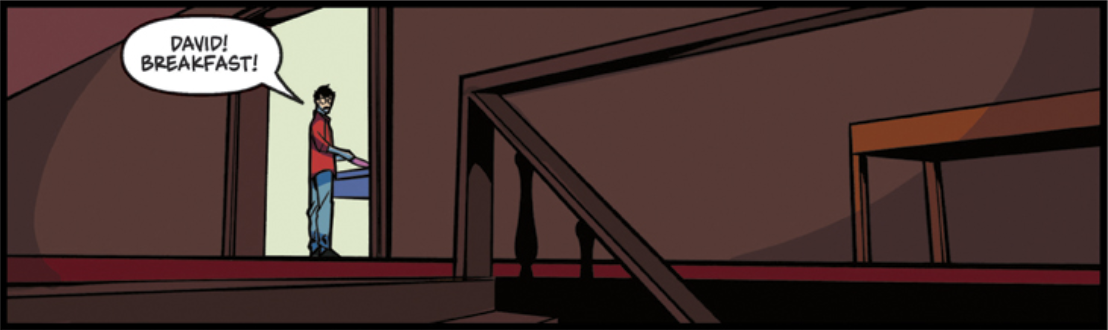
Edwin expected an immediate squeal of joy because David loved to eat. But Edwin didn’t hear anything.
He did, however, feel something.
The factory, as cool and dank as it was, didn’t get a lot of air movement. Edwin never felt drafts. But he did now. He felt a strong current of warm air.
Edwin’s muscles tensed. In spite of the warmth that wafted across his bare arms, Edwin felt a chill skitter down his spine. Frowning, Edwin looked around.
Edwin’s workshop looked as it should have. Mimic was sitting on Edwin’s worktable. Nothing was out of place.
So why was Edwin on the alert?
“David?” he tried again. This time, his son’s name came out louder, with just the slightest edge of fear.
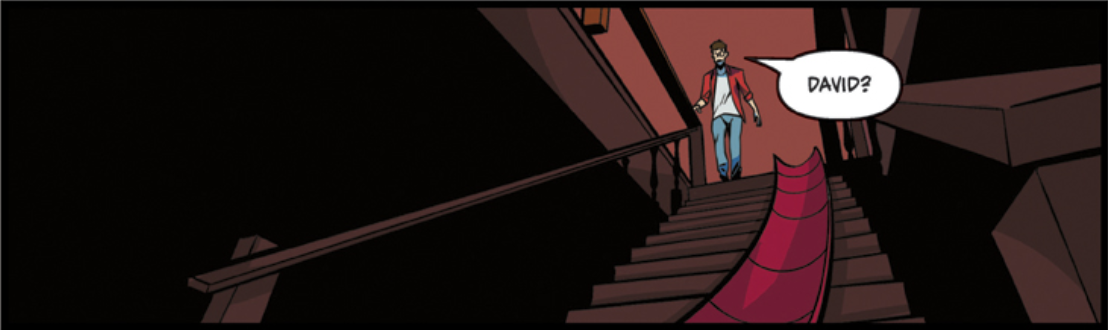
Edwin took a step forward. And that’s when he saw that the factory’s main double doors were standing wide open.

“David!” Edwin yelled.
Edwin took off toward the open doorway. Looking right and left past the pillars as he went, scanning the massive factory floor for his son, Edwin’s stomach lurched up into his chest.
As Edwin dashed through the factory’s open doors, he shouted for David again.
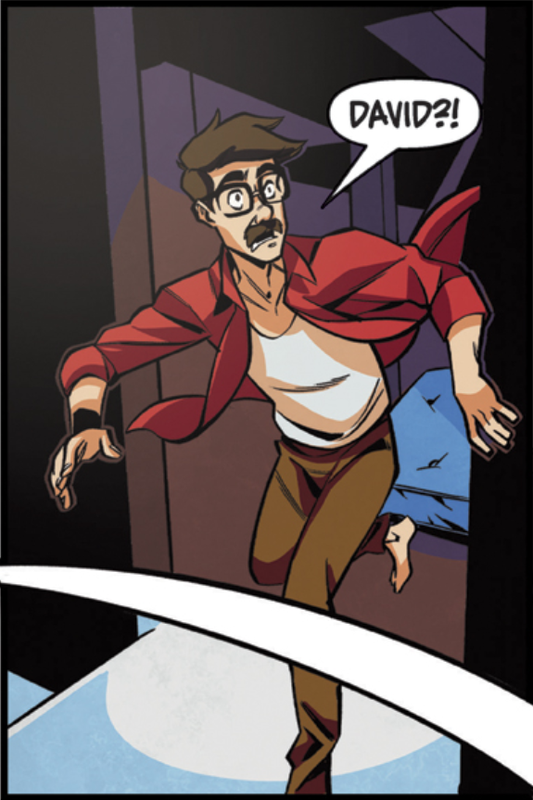
Under the shout, he could hear his mind repeating over and over, “Please, no. Please, no.”
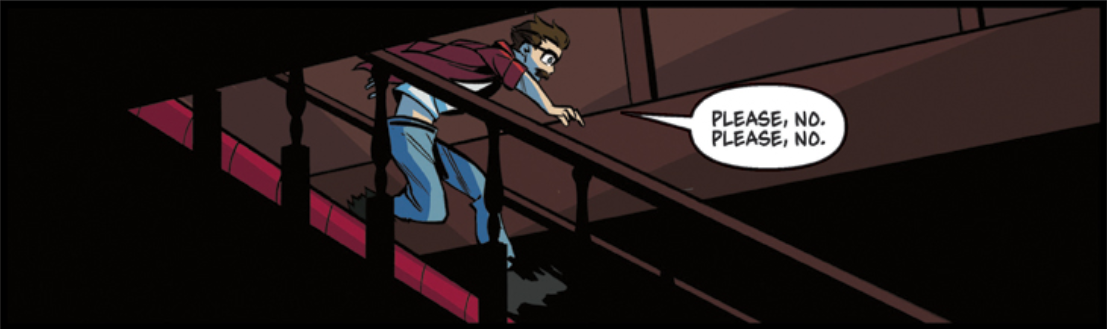
He wasn’t sure who or what his mind was talking to. But it didn’t matter. The appeal wasn’t heeded.
The next ten seconds of Edwin’s life played out as any normal ten seconds would. They unfolded one second at a time. For Edwin, however, the ten seconds compacted into an expanded infinite experience of horror that at once happened instantaneously and also went on forever.
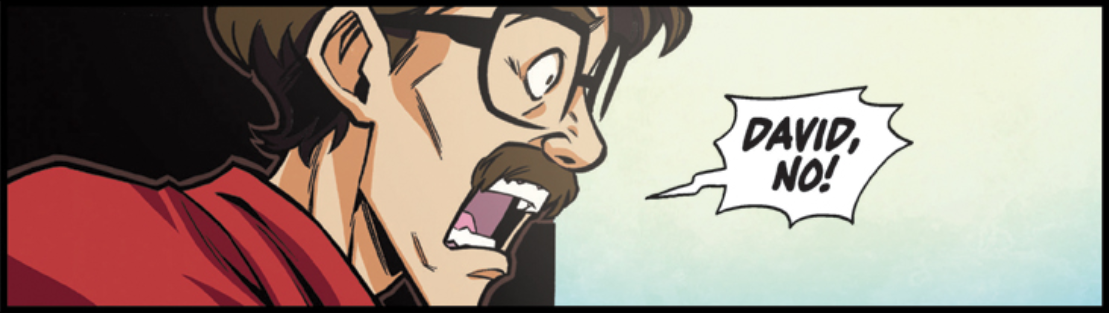
Edwin rushed out into the brilliant morning sun and breathed in a mouthful of humid air just as David’s ball bounced out into the nearest lane of traffic.
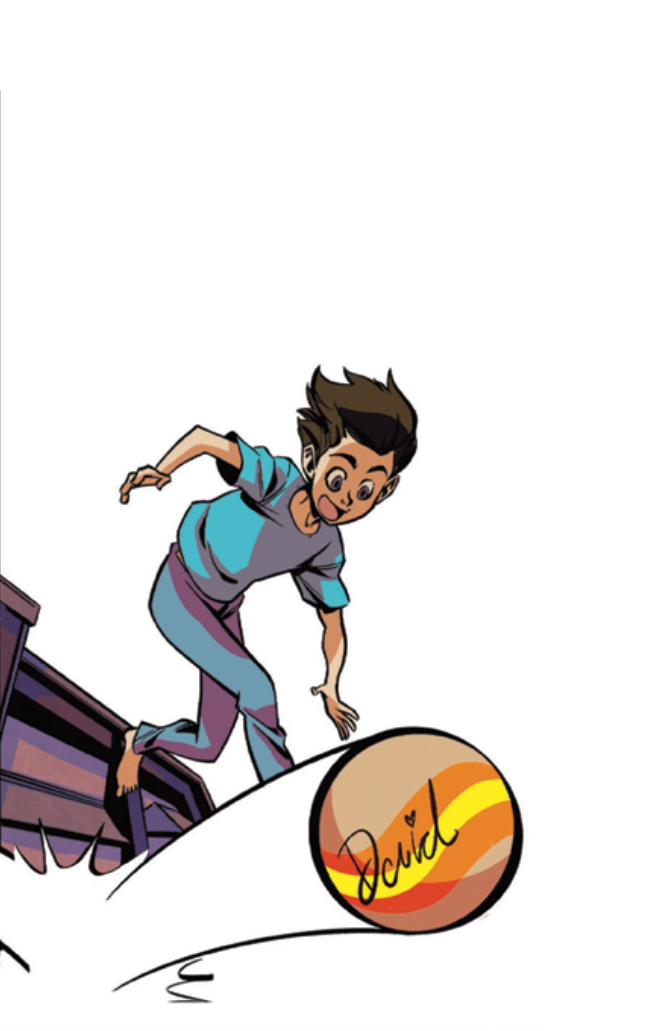
Oblivious of the oncoming white van, David, a wide grin on his eager face, his legs churning, dashed out onto the highway. His gaze was locked on the bright red ball.
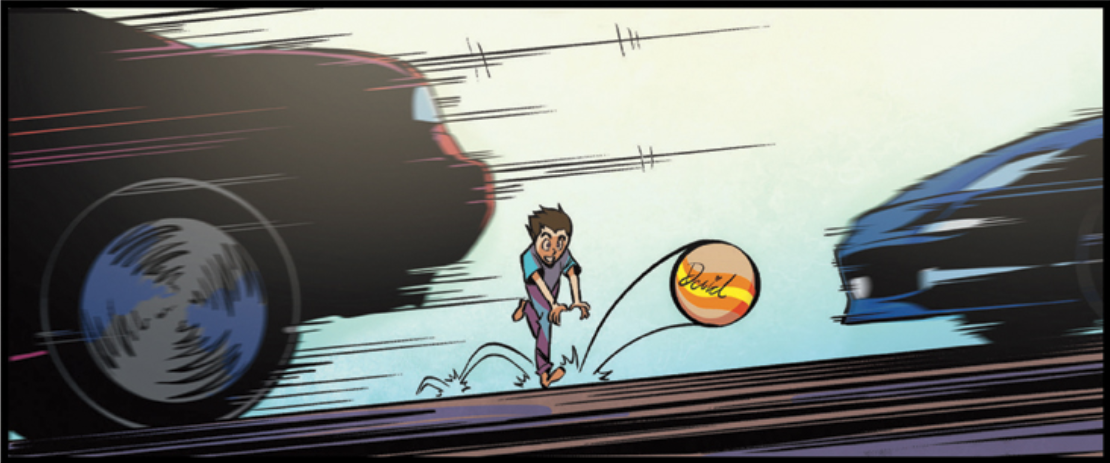
Time compressed even more. Edwin could no longer process what he was seeing as a String of events. His mind shut down. All he had were his senses.
The roar of an engine. The smell of exhaust. A blur of white skidding past Edwin’s gaze.
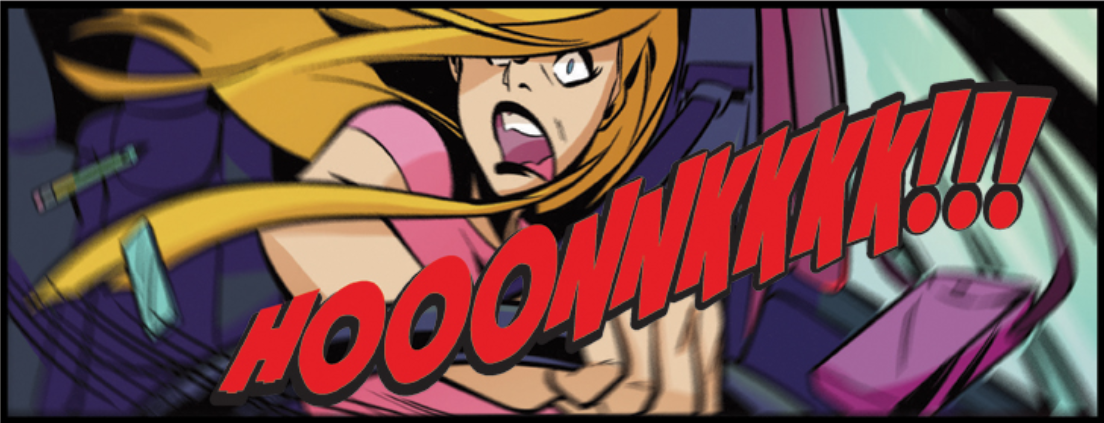
A screech of rubber on asphalt. The stench of burning rubber. The blur of white vibrating to a stop.
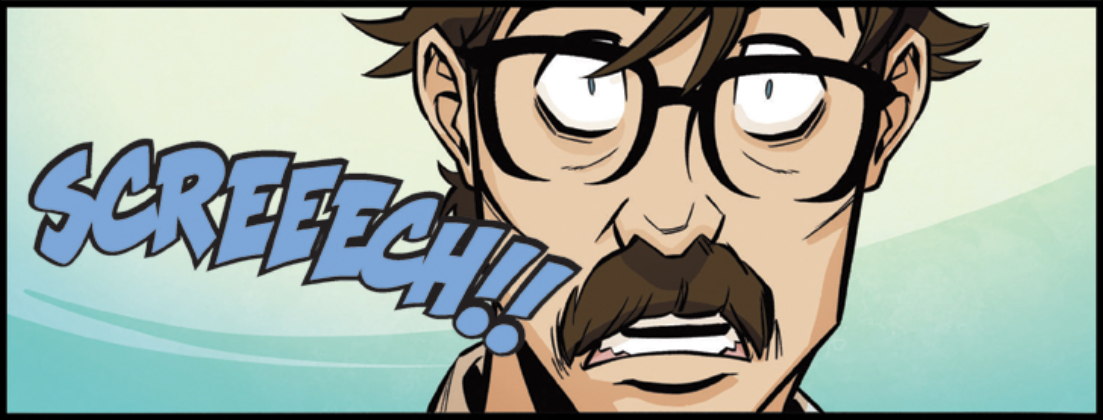
A sickening thud. A scream.
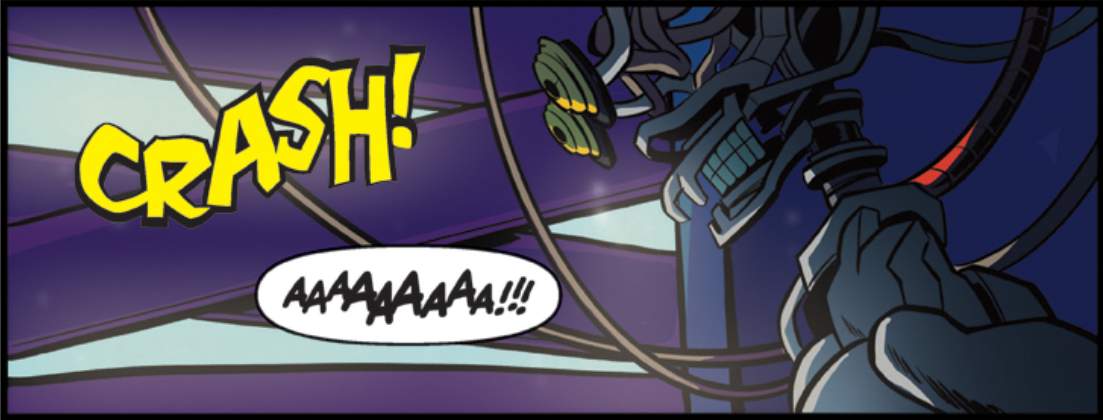
More screeching rubber. Shouts.
Edwin, as he streaked toward his son, tried to convince himself that what he’d just watched hadn’t happened. He tried to tell himself David was fine. But he knew he was lying to himself. As he flew toward his son, Edwin knew he was running both toward something he’d never reach and away from something he’d never escape.
“Call 911!” someone screamed.
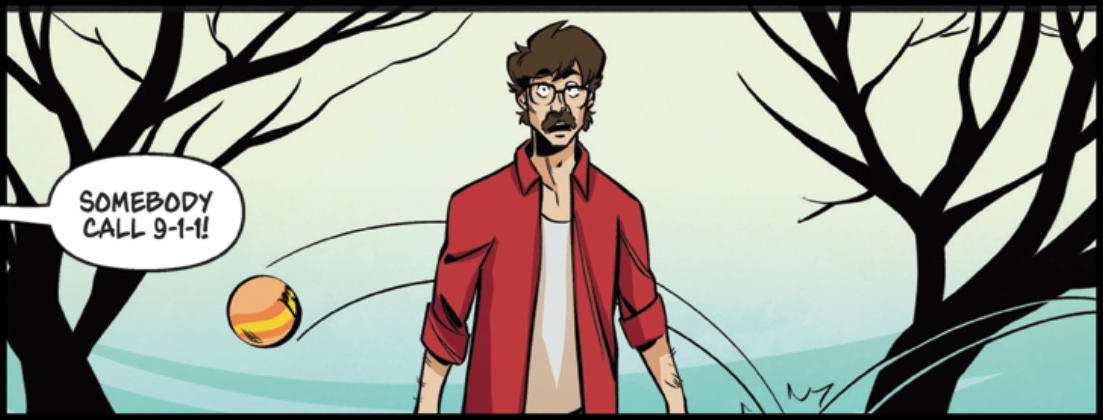
Edwin reached David’s side. He bent over and tried to gather David into his arms. But another set of stronger arms pulled him back. “Don’t move him,” a man’s voice said.
Edwin lashed out, fighting to free himself. Everything lost focus; Edwin could only see flashes of color—crimson red spreading across an expanse of black, bright blue pressing down from overhead, snatches of white and orange and darker blue and yellow.
Edwin opened his mouth, and he heard a high-pitched keen. The sound, he realized, was coming from him. The arms that gripped him held on even tighter. Edwin’s senses failed him. The sounds faded into a distant roar. The colors blurred together. The sun was blotted out by a darkness that Edwin intuitively knew was coming from someplace within his soul.
Out under the bright morning light, in the road near his son’s broken body, Edwin had lost his ability to process reality. But after that, he lost two weeks of his life entirely. He disappeared into a fugue he didn’t even know was a fugue until he came out of it and realized that time had marched on after David had passed. Edwin had no memory of anything since then except the seemingly endless loop of David’s death, which replayed in Edwin’s mind’s eye over and over and over again.
Edwin came out of the lost time one morning on another sunny day. Opening his eyes, Edwin found himself in his own bed, alone.
Edwin blinked and rubbed his face. He struggled to get his mental bearings. And when he got them, he wished he hadn’t.
Although he couldn’t remember any of the discrete details, Edwin had an intellectual understanding that he’d lived through burying his only son.
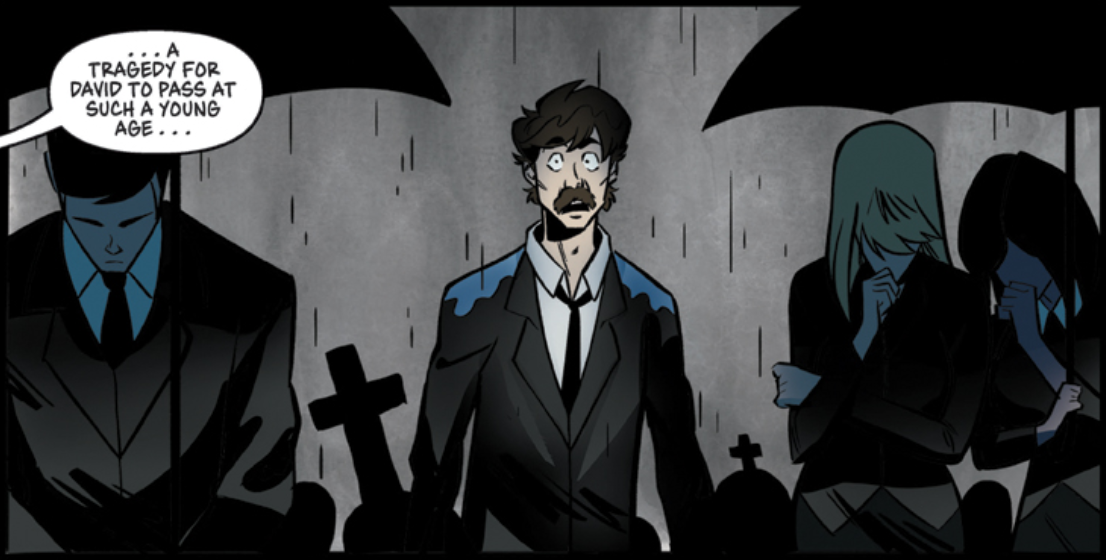
He grasped that he was alone in the factory, and that life was supposed to be going on.
Not sure he had the strength to stand, Edwin tried putting his feet on the floor and pushing himself off the bed. Amazingly, his legs held him up. They also took him to the bathroom and got him through a normal morning routine.
As if anything could be normal. As if anything would ever be normal again.
When Edwin faced his mirror, he wasn’t surprised to be looking into the eyes of a stranger. He didn’t feel like Edwin anymore. He felt like a husk. He looked like one, too. Apparently, he hadn’t eaten much, if anything, during his lost two weeks. The gaunt face of a broken man looked back at Edwin from the bathroom mirror. A scraggly beard was filling in around his full, and now drooping, mustache.
Turning away from himself, Edwin left the bathroom. He headed toward the stairs and shuffled to his worktable. There, his gaze landed on Mimic.
I should deactivate him, Edwin thought. But Edwin didn’t have the energy to do it. He barely had the energy to get to his worktable.
Dropping into his rolling chair, Edwin surveyed his current project. He’d been working on it, he realized, during the two weeks he couldn’t remember living through.
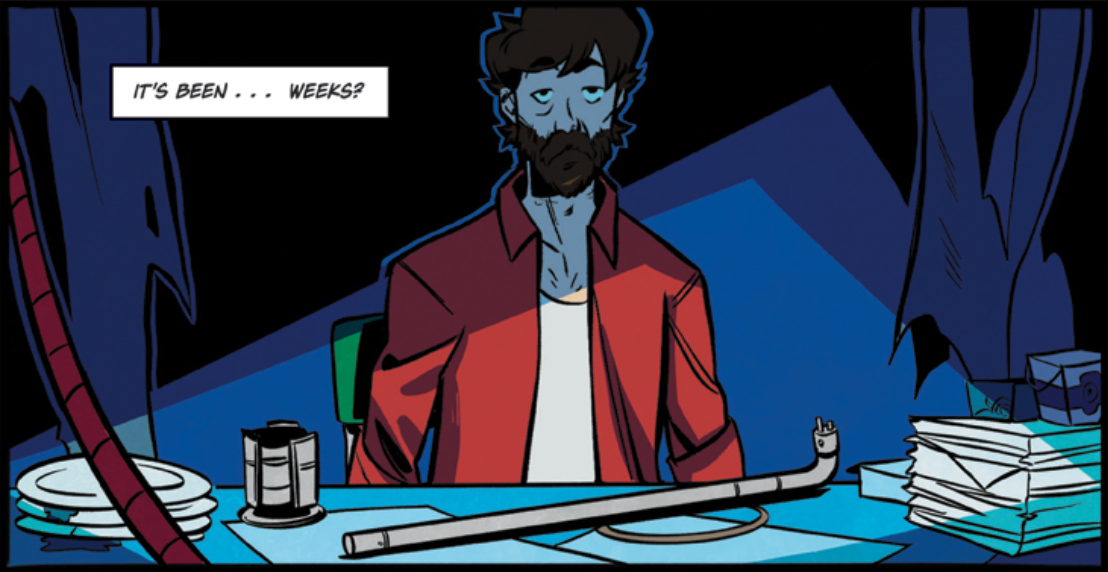
It was further along than it had been the day that David had died. Edwin had no memory of doing the work.
And he had no desire to continue it now. But what choice did he have? His son was dead, but Edwin had obligations. Sighing, he bent over the worktable and told himself to concentrate.
Edwin picked up a pair of needle-nose pliers. He looked at a tangle of wires and then gazed at the endoskeleton he was supposed to be merging with Fazbear Entertainment’s latest costume, a blue bunny. Edwin frowned at the pliers. For the life of him, Edwin couldn’t remember how to grip them. Did he use a fisted grip or a fingertips grip? He tried both. Neither felt right.
A long scrape preceded a metallic clunk. Edwin shifted his gaze from the pliers to Mimic, who had just climbed up onto the table.
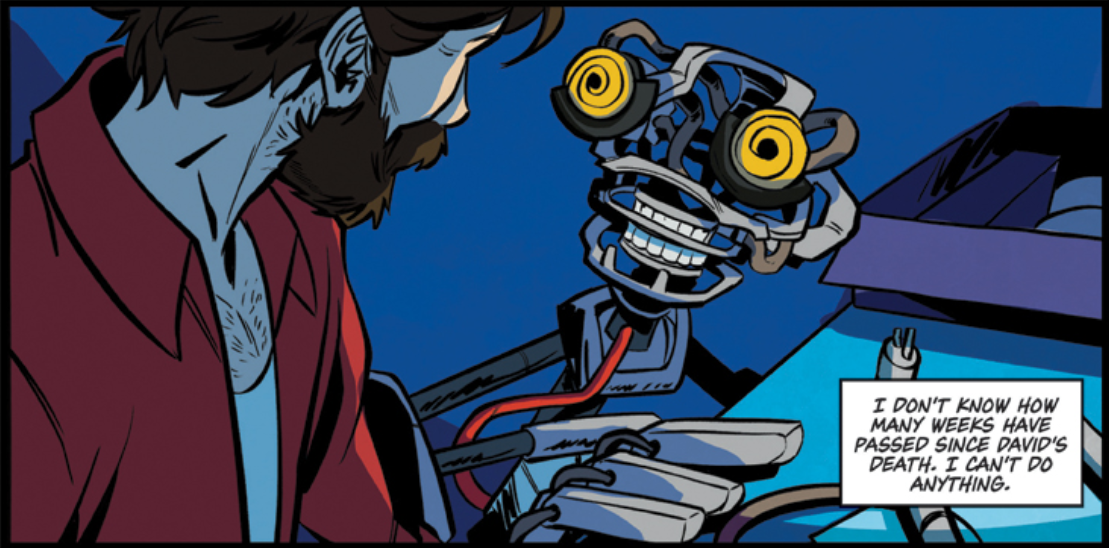
Mimic clutched his makeshift tiger. Edwin stared at it, frowning.
Slowly, a memory clawed its way through the murk that was his mind. In the recollection, Edwin was snatching David’s Tiger from Mimic’s grasp. Mimic had tried to start carrying around Tiger, Edwin realized.
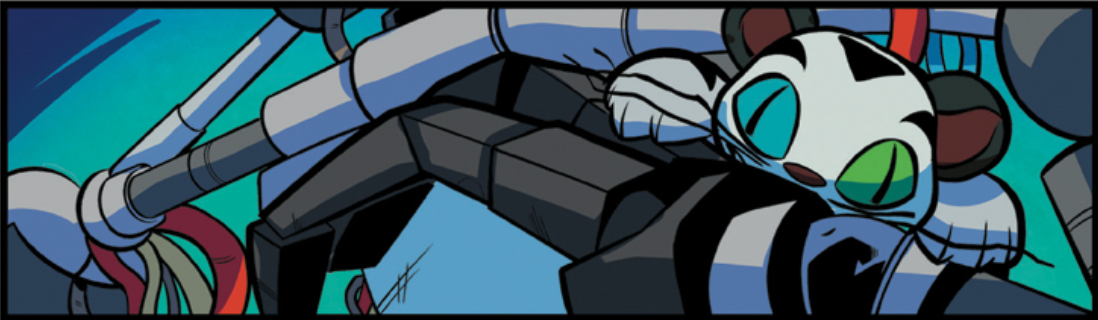
He’d blocked it out. Now, he could remember squeezing Tiger, crying so hard that his tears soaked Tiger’s fur.
Edwin shook his head, willing the memory to go back where it had come from. Blankness was better than the jagged shards of scenes like that.
Edwin glanced at Mimic. “Don’t you have something better to do than stare at me?” Edwin grumbled.
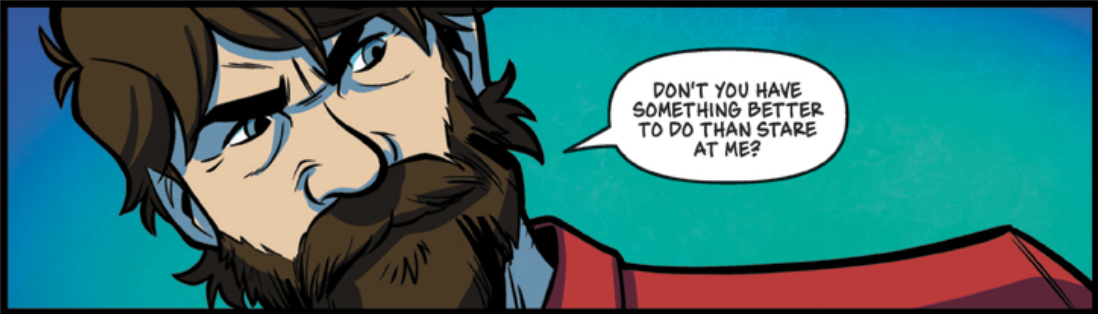
Mimic set aside his tiger and lifted both sets of pincers. Forming one set into a bowl shape, he used the other pincers to create a makeshift spoon.
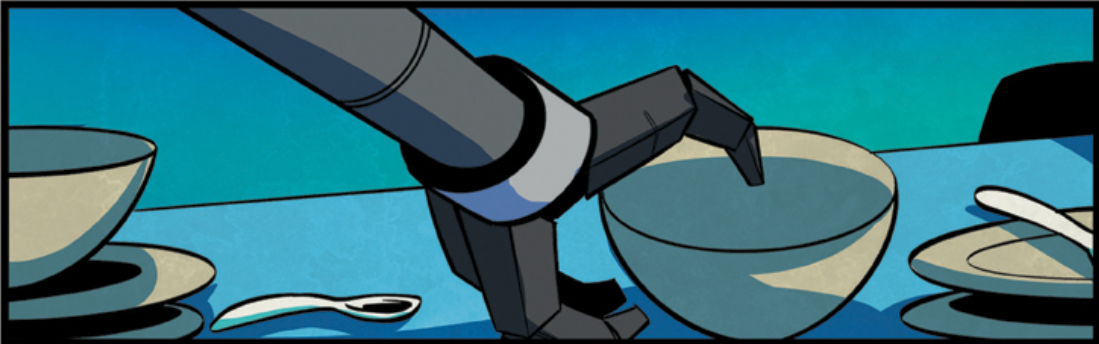
Mimic mimed lifting the spoon to his mouth.
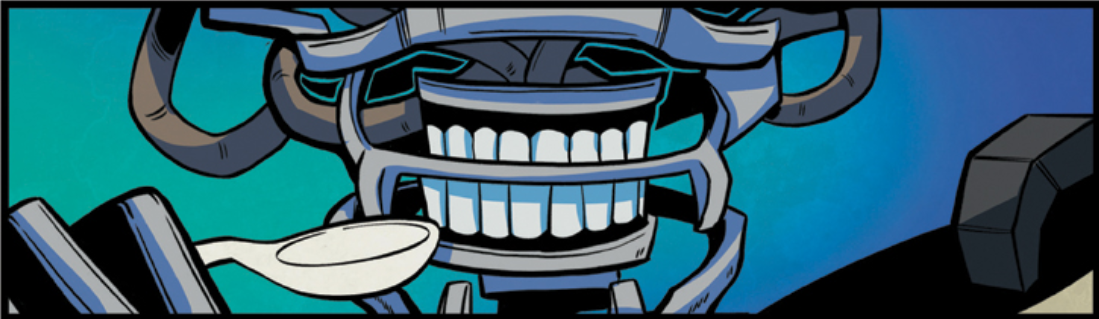
Then Mimic used his pincers to approximate the gesture of wiping ice cream from his chin.
It was David’s code for wanting ice cream. Seeing Mimic use David’s sign language was too much for Edwin to process.
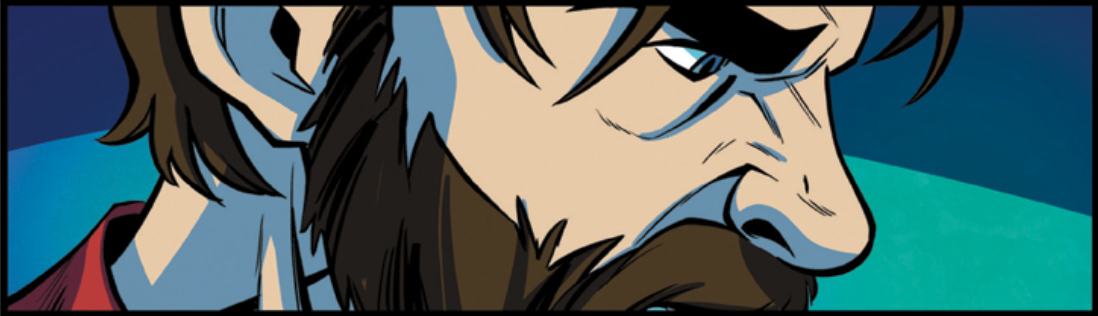
He roared in fury and self-recrimination.
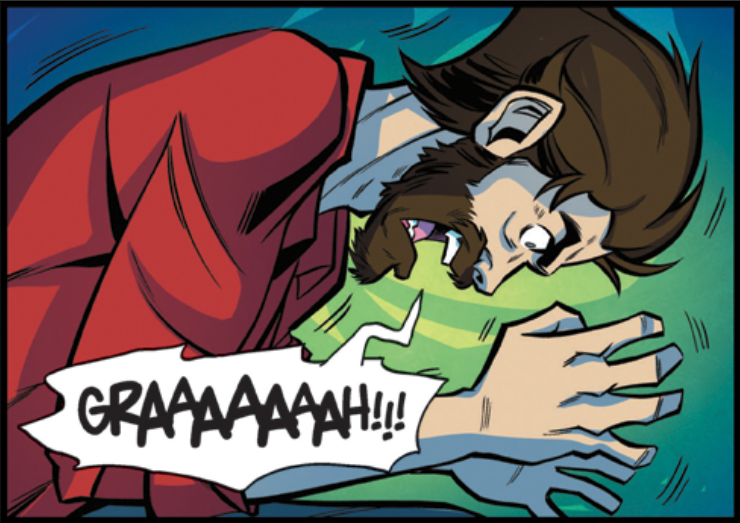
Reaching out blindly, not knowing why he needed it, Edwin sought something to wield. He had a sudden, out-of-control imperative to hit something ... no, to destroy something.
Edwin’s hand closed over a length of metal. Sharp-edged and cold, the metal was heavy. The weight of it felt good in Edwin’s hand. So did lifting it.
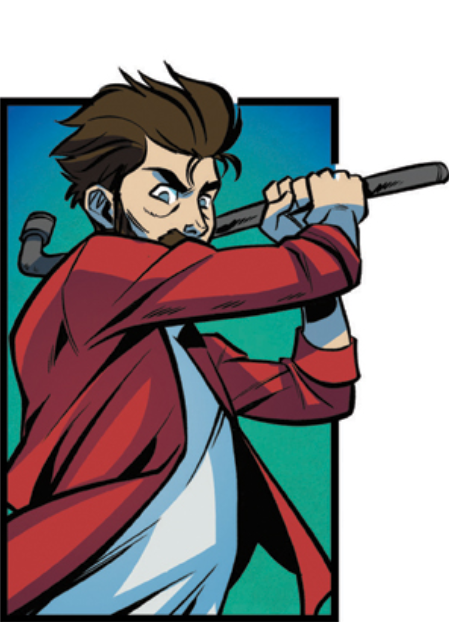
So did bringing it down on the animatronic’s head.
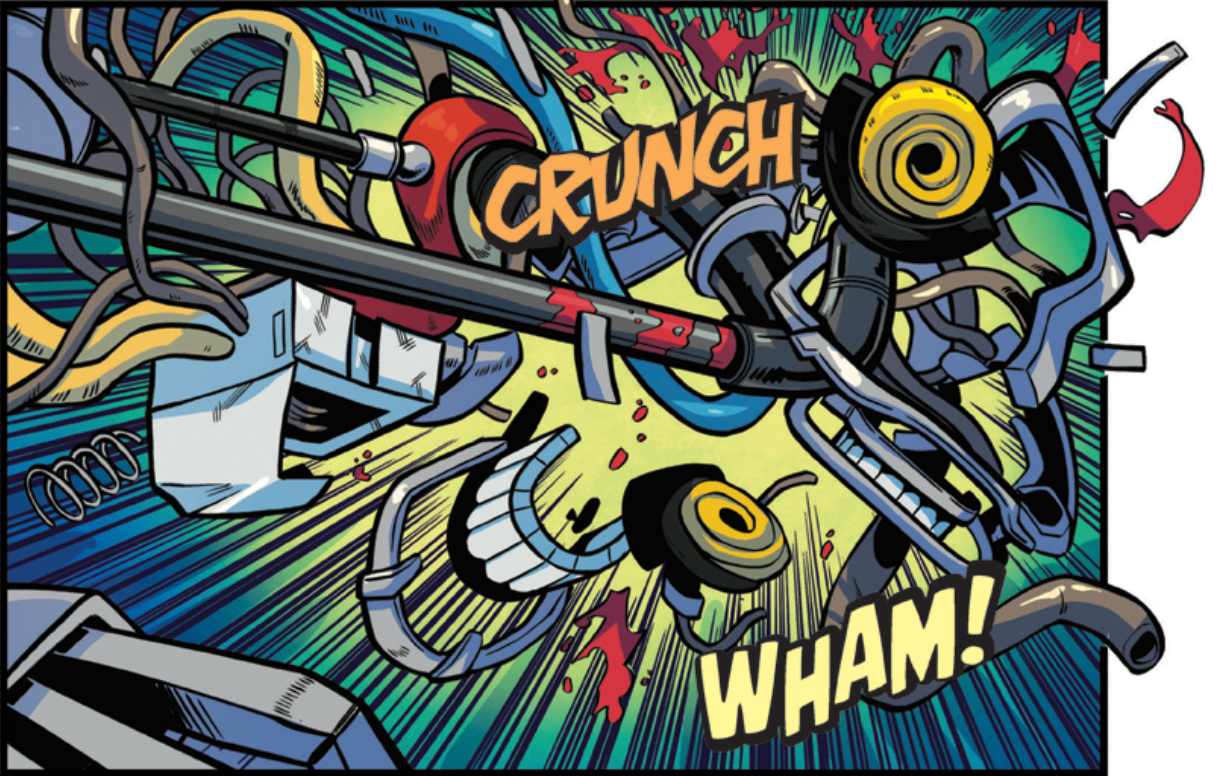
Howling like a wild animal, Edwin battered Mimic over and over and over with the metal rod. Metal sparked against metal. The reverberation of each blow bounced up Edwin’s arm, sending jabs of pain into his shoulder. But Edwin didn’t care. He only cared about destroying Mimic, pulverizing the only real thing that Edwin could attack in an effort to annihilate his pain.
Edwin pummeled Mimic again and again and again. He battered the animatronic’s head, thrashed at his chest, and lashed at his arms.
Edwin’s swings were big and wide and wild. His muscles burned with the effort of pulling back the rod and arcing it toward Mimic in one strike after another. Edwin was panting, his chest heaving. The spittle that had shot from his mouth when he’d screamed at Mimic was now a froth that jetted from Edwin in great gushes.
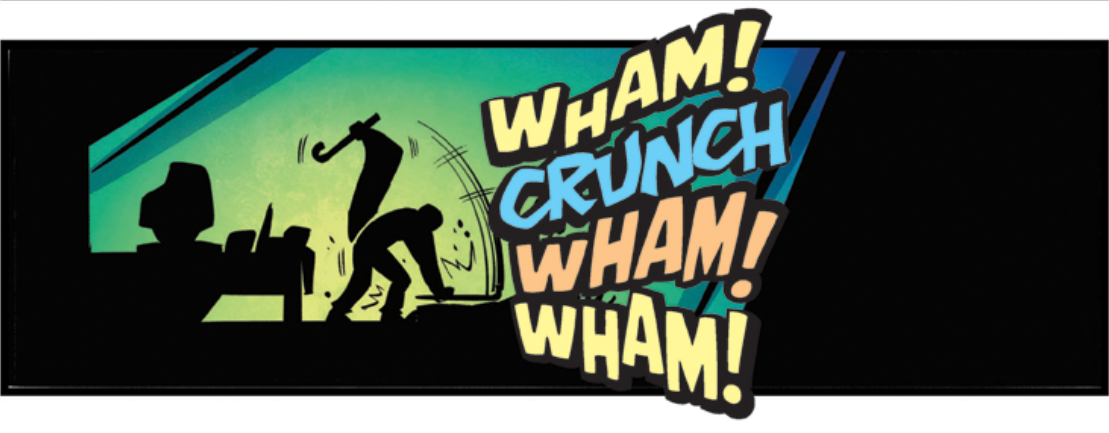
When his sputum landed on one of Mimic’s eyes, Edwin realized that the eye was dangling out of its socket, hanging against Mimic’s cracked fake teeth. Edwin, who had been so lost in his rage that he’d been nearly blinded by it, blinked to clear his vision. That’s when he saw how much damage he’d done.
Mimic’s eye wasn’t the only thing that was out of place. The metal Edwin had used to form Mimic’s forehead and jaw was crimped together, compressing Mimic’s face. The broken teeth were shoved back into Mimic’s head, caught up in torn and tangled wires. The remainder of Mimic’s wiring had been raggedly wrested away from Mimic’s metallic spine, and the spine itself was bent backward. Mimic’s rib cage was crushed in multiple places, and Mimic’s arms hung askew. Mimic’s pincers were mutilated.
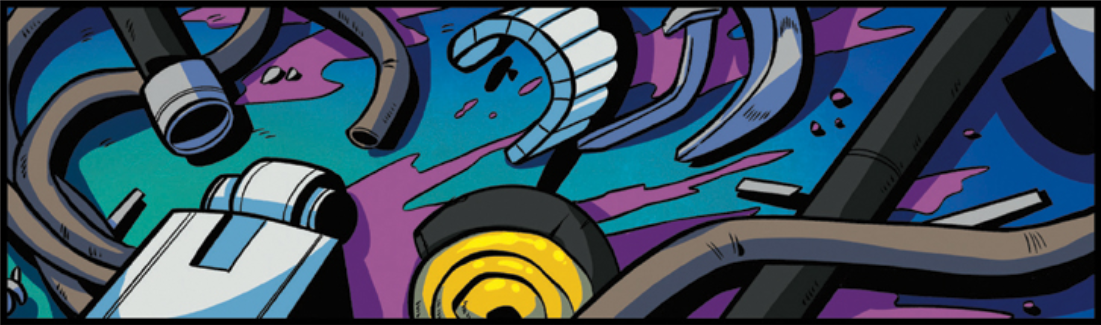
Edwin was destroying his creation.
But he didn’t care.
For two weeks, Edwin had been lost in a void of despair, and now his despair had turned to rage. He had to get it out somehow or it would consume him. Because Edwin knew, even as he continued to scream and foam at the mouth, that the real object of his anger was himself. And that infuriated him even more. He wanted to destroy himself, but he couldn’t. So, he sublimated his wrath onto Mimic with an intensity he hadn’t known he had in him. He lost control of his humanity. He was devolving into the primitive version of himself, into something ferocious and savage. He could almost feel his murderous thoughts pouring through his muscles and transfusing through the metal into Mimic’s systems.
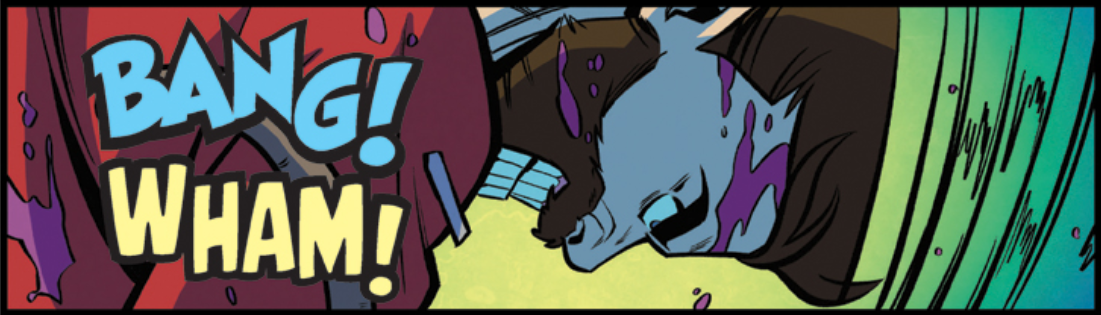
Edwin wasn’t sure how long he whaled on Mimic before he finally ran out of strength.

And he ran out of anger.
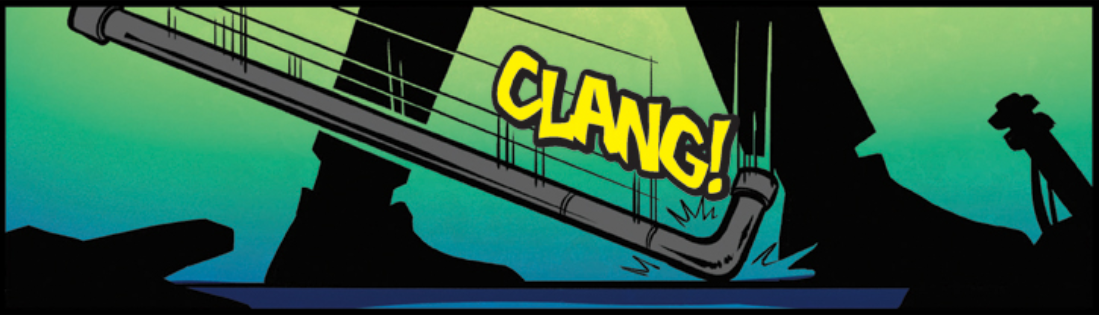
Edwin’s legs went out from under him. He collapsed to the ground and stared at the remains of his creation, the remains of his son’s friend.
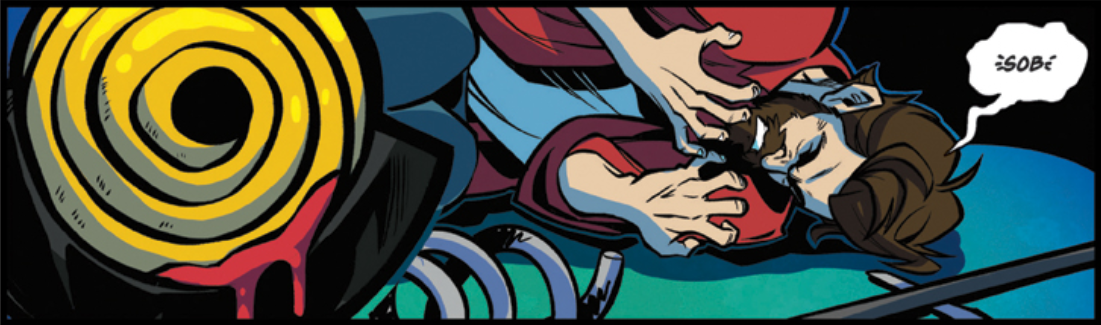
Mimic, though not completely destroyed, was now a pathetic picture of total defeat. At some point during Edwin’s assault, Mimic had toppled over, and he now lay, arms bent, in one last tragic copy of Edwin’s little boy.
Edwin dropped his head into his hands. His anger dissolved into regret. And the regret brought tears that he thought just might flow forever.